Walking onto a boat dealership lot is an exciting moment. You can practically smell the lake water and feel the sun on your face already. But if you aren’t prepared, the sheer number of options, sizes, and technical specs can feel a bit overwhelming. At Pontoonboats-org, we’ve seen it all, and we want to make sure you walk into that showroom feeling like an expert.
Choosing the best pontoon boats for your lifestyle isn't just about picking a color you like. It’s about understanding how you’ll use the boat, how it handles, and what features will actually make your time on the water better. We address all these questions and more in this guide.
Here are 10 things you should know before you shake hands with the dealer.
1. What is Your Primary "Mission" on the Water?
Before you look at a single boat, you need to decide what you’ll be doing most of the time. Are you planning on hosting large sunset cocktail hours, taking the grandkids out for tubing, or heading to a secluded cove to fish?
Different layouts cater to different activities. An entertainment-focused layout might feature a wrap-around bar and a premium sound system, while a fishing model will have dedicated swivel chairs and livewells. We have a great guide on how to choose the best pontoon boat for family fun that compares these different styles side-by-side.
2. Two Tubes or Three? (The Pontoon vs. Tritoon Debate)
This is one of the most common questions we get. A traditional pontoon has two tubes. It’s perfect for calm lakes, smaller crowds, and casual cruising. They are generally more budget-friendly and fuel-efficient.
However, if you plan on navigating choppy water, carrying a dozen friends, or pulling skiers, you might want a "tritoon" (three tubes). A third tube adds incredible stability and allows for much higher horsepower. We have you covered if you’re still on the fence; check out our breakdown of tritoon vs pontoon to see which fits your specific lake.
3. Don't Underpower Your Boat
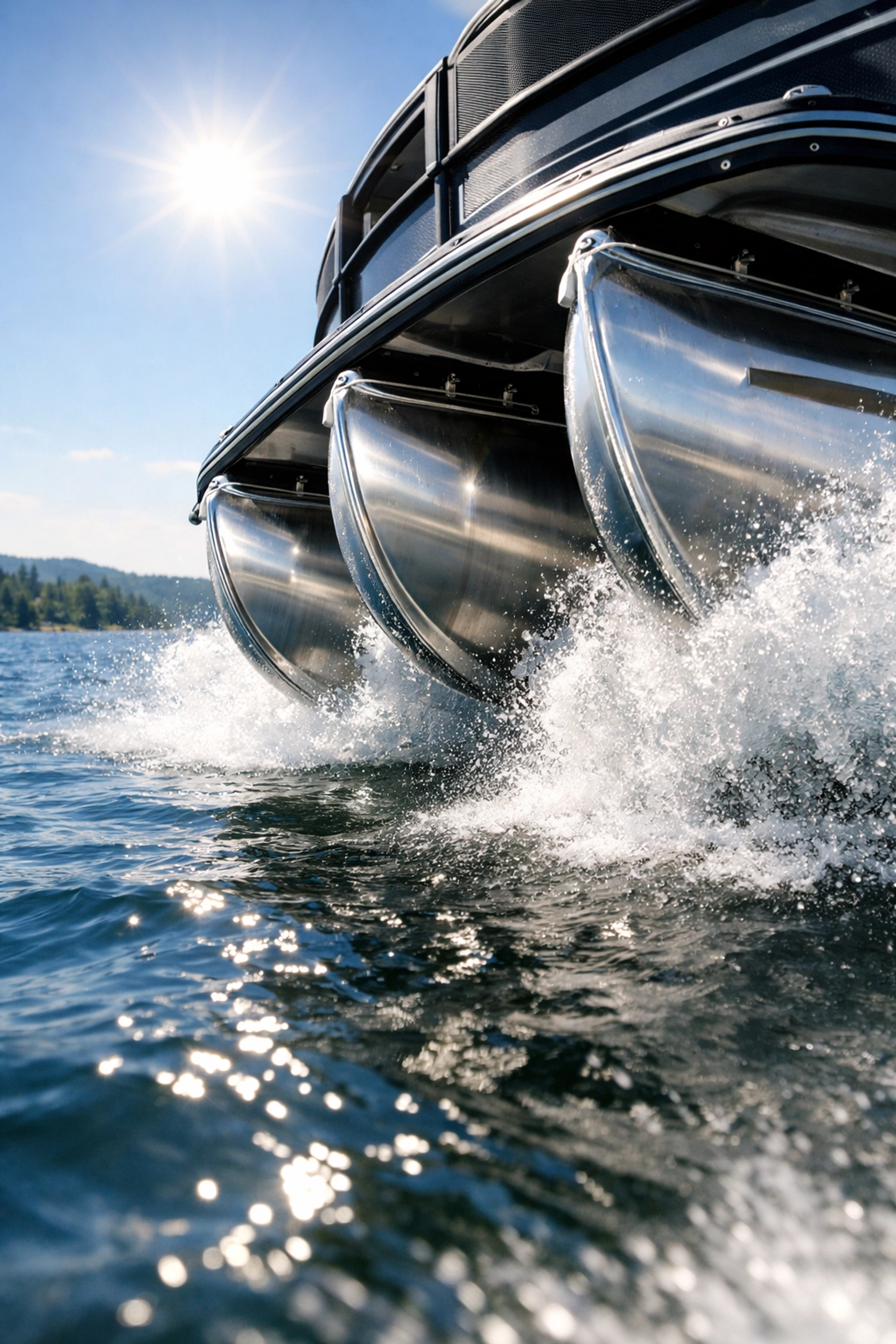
We see it all the time: a buyer gets a great deal on a boat, only to realize later that the engine isn't strong enough to get a loaded boat on plane. The engine is the most expensive part of your purchase, so you want to get it right the first time.
If you’re mostly cruising at low speeds, a 90hp or 115hp might be plenty. But if you have a tritoon or want to hit higher speeds, a 150hp is often the "sweet spot" for performance and value. We’ve actually done the math for you in our 115hp vs 150hp comparison. Trust us, it’s better to have more power than you need than to be stuck in the slow lane.
4. Evaluate Construction Quality and Durability
Not all pontoons are built the same. When you're at the dealer, look under the deck. You want to see thick, closely spaced cross-members (the "ribs" of the boat) and solid "M-brackets" connecting the tubes to the deck.
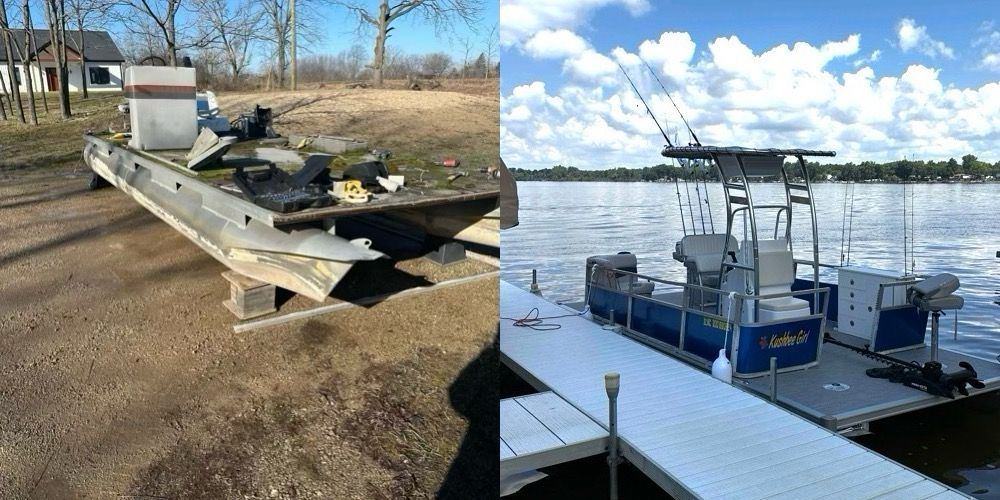
Quality materials matter for longevity. For example, if you plan on bringing your dog, look for heavy-duty vinyl that can stand up to paws and claws. If you buy a boat with sub-par construction, you might find yourself looking into a real-world restoration project sooner than you'd like.
5. Understanding Handling and "V-Toon" Technology
If you’ve driven a traditional pontoon, you know they tend to turn "flat" or even lean outward in a turn. Modern performance pontoons use technology (like Manitou’s V-Toon) to mimic the handling of a fiberglass V-hull boat.
By using a larger center tube that sits deeper in the water, the boat can "bank" into turns. This makes the ride much smoother and sportier. If you enjoy a spirited drive, ask the dealer about lifting strakes and performance skins: these are the small metal fins on the tubes that help the boat lift out of the water and gain speed.
6. Think About Your "Must-Have" Accessories Early
While you can always add accessories later, some are much easier to install at the factory. Consider things like built-in GPS/depth finders, upgraded lighting packages, or a "blackout" trim package.
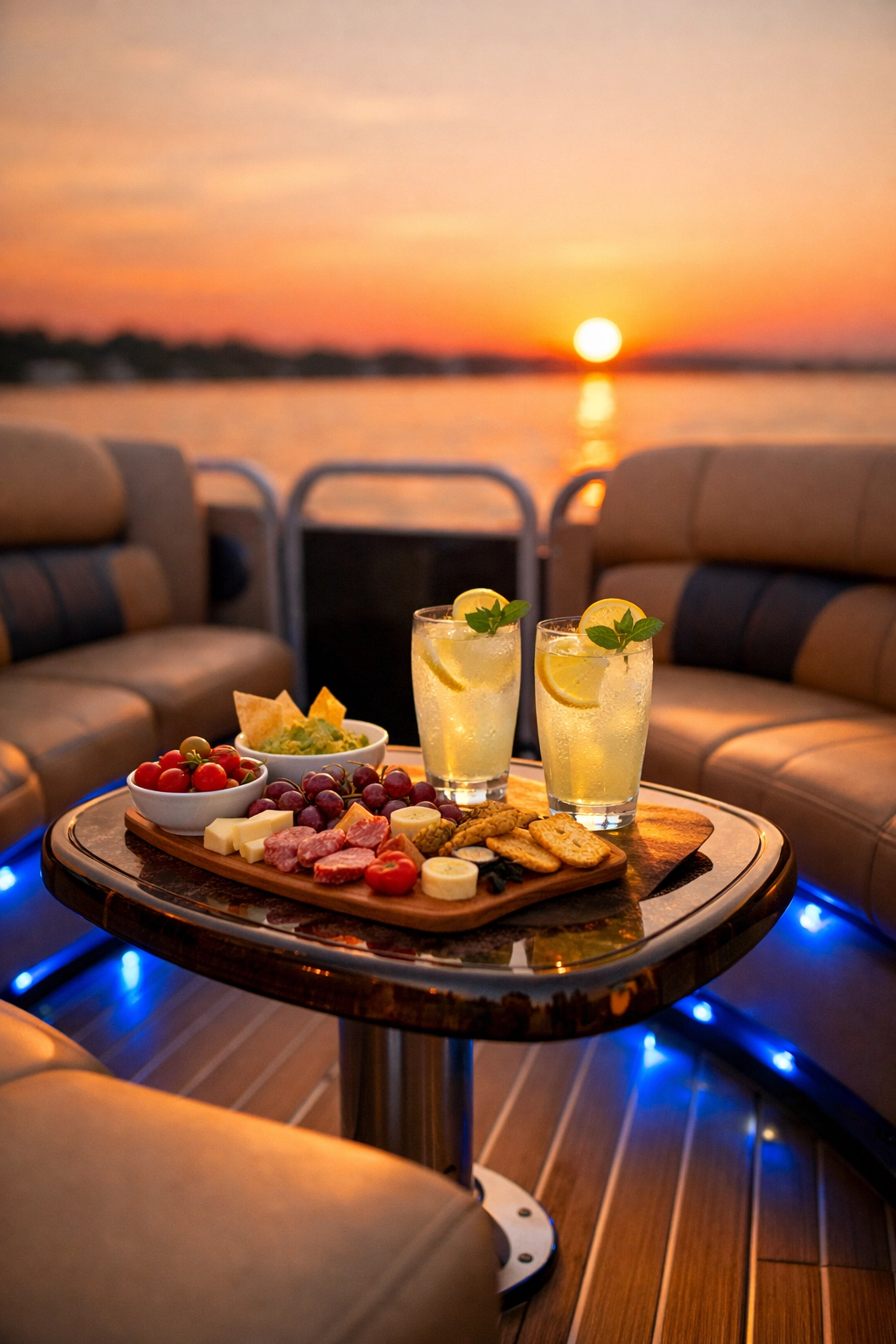
Pontoons are essentially floating living rooms, and the right pontoon boat accessories can transform the experience. From unforgettable family day must-haves to creative floating oasis upgrades, knowing what you want ahead of time helps you negotiate a better total package price with the dealer.
7. Don't Forget About Fishing Features
Even if you aren't a pro angler, having a few fishing features can add a lot of versatility to your boat. Dedicated fishing pontoons often include:
- Swivel casting chairs.
- Built-in rod lockers.
- Aerated livewells to keep bait or the "catch of the day" fresh.
If you find a great deal on a cruising model, don't worry: you can always learn how to turn your standard pontoon into a pro fishing machine later on.
8. Safety and Ease of Boarding
Take a look at the gates and the ladder. If you have elderly family members or young children, you want a ladder with wide, flat steps that extend deep into the water. Round, thin rungs can be painful on the feet and difficult to climb.
Also, check the height of the rails and the locking mechanism on the gates. You want to feel secure when the boat is moving. We always recommend checking out our ultimate guide to pontoon boat accessories to see what safety gear is essential for your first trip out.
9. Budget for the "Invisible" Costs (Insurance & Storage)
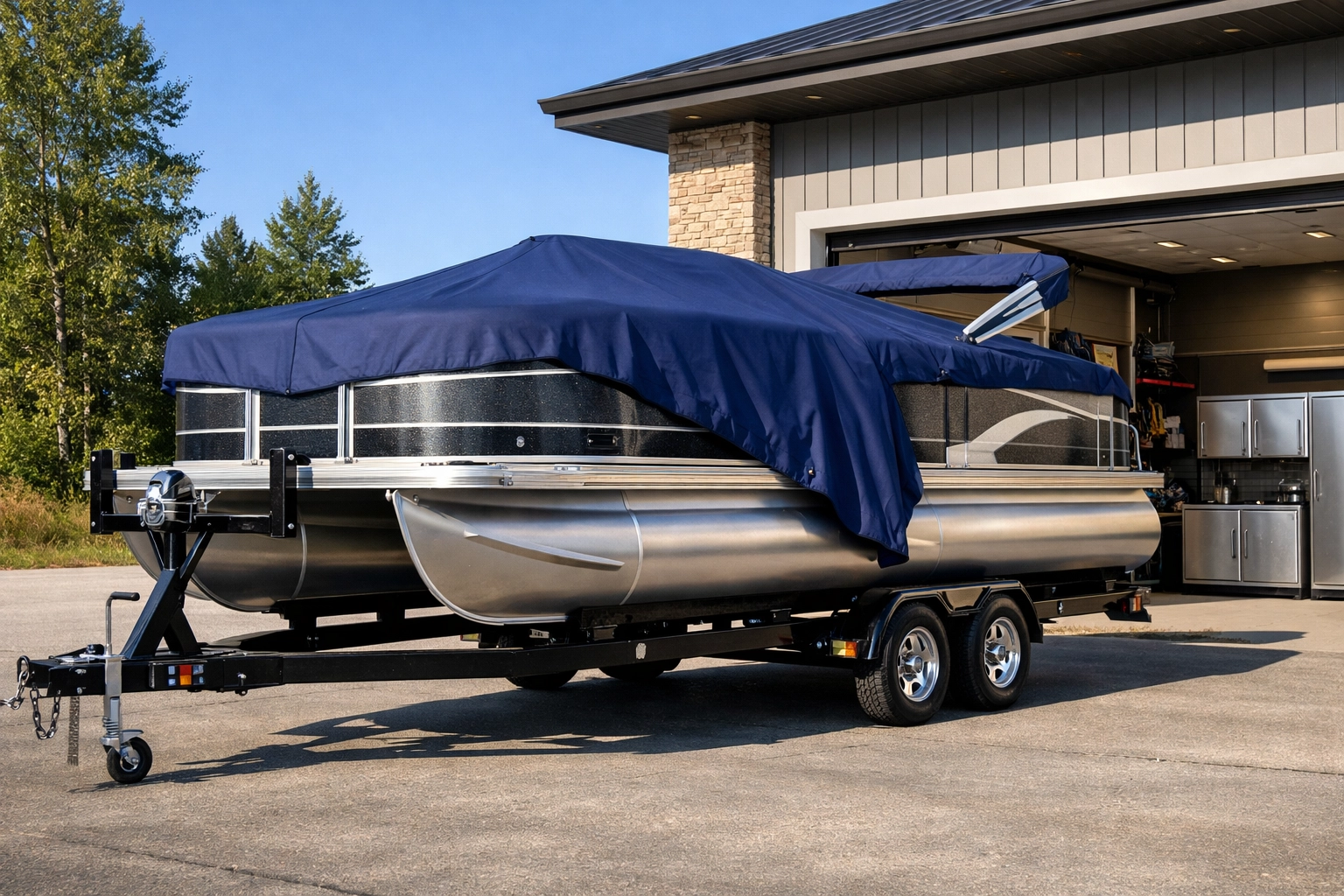
The price on the sticker isn't the final number. You need to factor in a trailer (if you aren't keeping it at a marina), winter storage, and insurance.
Many people ask, "Can't I just add the boat to my homeowner's policy?" Usually, the answer is no: or at least, you shouldn't. Pontoons have specific needs, and we've broken down the truth about specialized pontoon insurance in 2026 so you aren't caught off guard by a claim rejection.
10. The Dealer Relationship is Key
When you buy a boat, you are entering into a long-term relationship with that dealer. You’ll rely on them for engine service, warranty work, and potentially winterization.
Ask the dealer about their service department's lead times during the summer. Do they offer mobile service? Do they have a good reputation in the local boating community? A great boat from a bad dealer can quickly lead to a frustrating ownership experience. If you’re a first-time buyer, we recommend reading our guide on how to choose the best pontoon boats for first-timers to help you vet both the boat and the seller.
Final Thoughts Before You Hit the Dock
Finding the best pontoon boat is all about balance. You want enough power to be safe, enough space to be comfortable, and enough quality to ensure the boat lasts for years of memories.
We know there is a lot to take in, but remember: you don’t have to figure it all out today. Take your time, ask the dealer plenty of questions, and use our resources here at Pontoonboats-org to verify what they tell you. Whether you are looking for best value pontoons or just want to learn how to wake up your boat faster for the spring, we’ve got your back.
Happy hunting, and we’ll see you on the water!