So, you’ve decided that 2026 is the year you finally claim your spot on the water. We love that for you! There is nothing quite like the freedom of a summer afternoon spent drifting with friends or watching the kids catch air on a tube. But as you start browsing the latest models, you’re going to hit a major fork in the road: do you go with a traditional pontoon or upgrade to a tritoon?
At Pontoonboats-org, we live and breathe the lake life. We know that choosing between two logs and three isn’t just about the price tag: it’s about how you plan to spend your weekends. Whether you’re a “quiet cove and a cold drink” kind of boater or a “full throttle and big waves” enthusiast, we have you covered. Let’s break down the key differences so you can make the best choice for your family.
What Exactly is the Difference Between a Pontoon and a Tritoon?
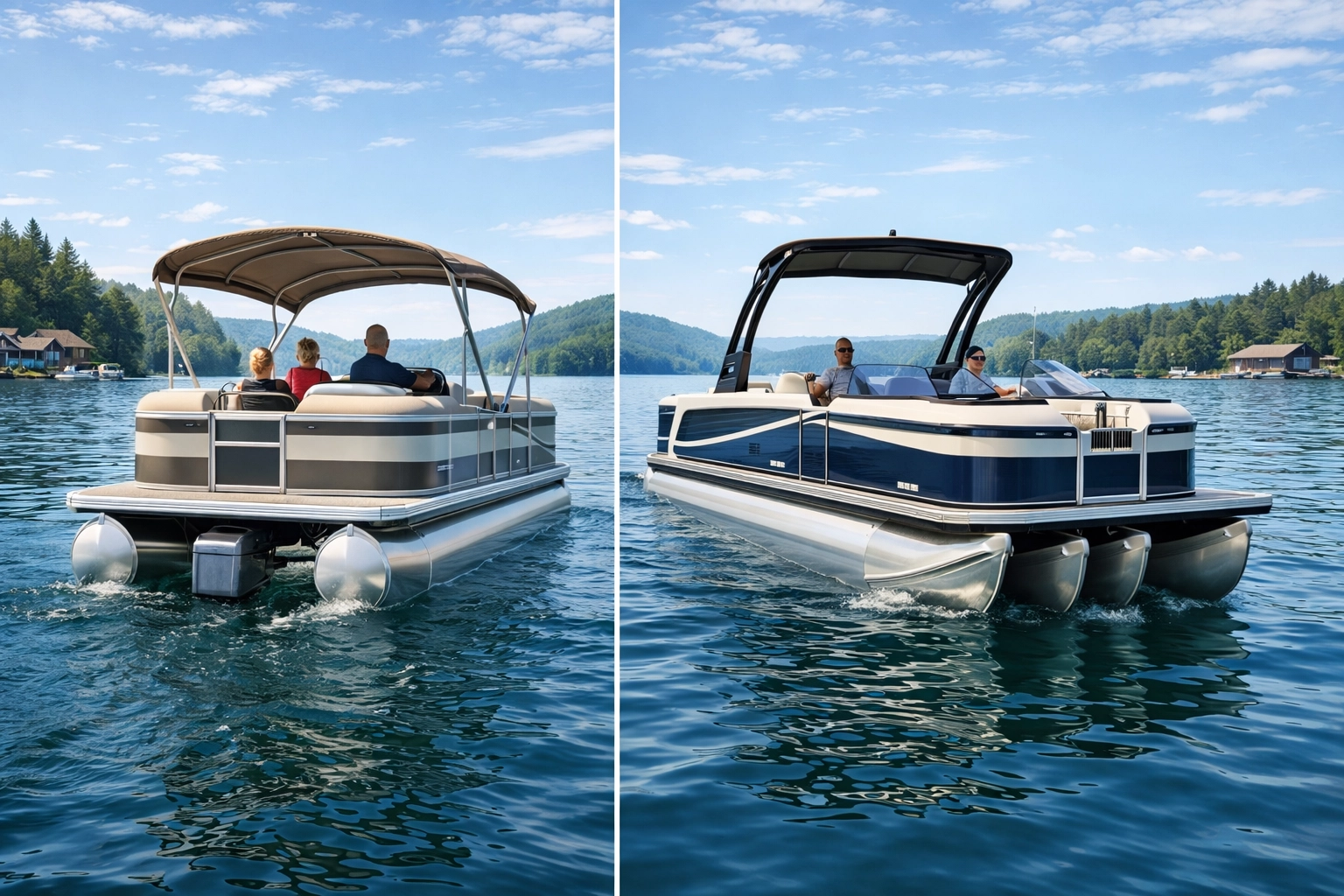
When people talk about pontoon boats, they are generally referring to the classic design: a flat deck supported by two aluminum tubes (logs). This design has been the gold standard for lake relaxation for decades. It’s simple, effective, and provides a stable platform for lounging.
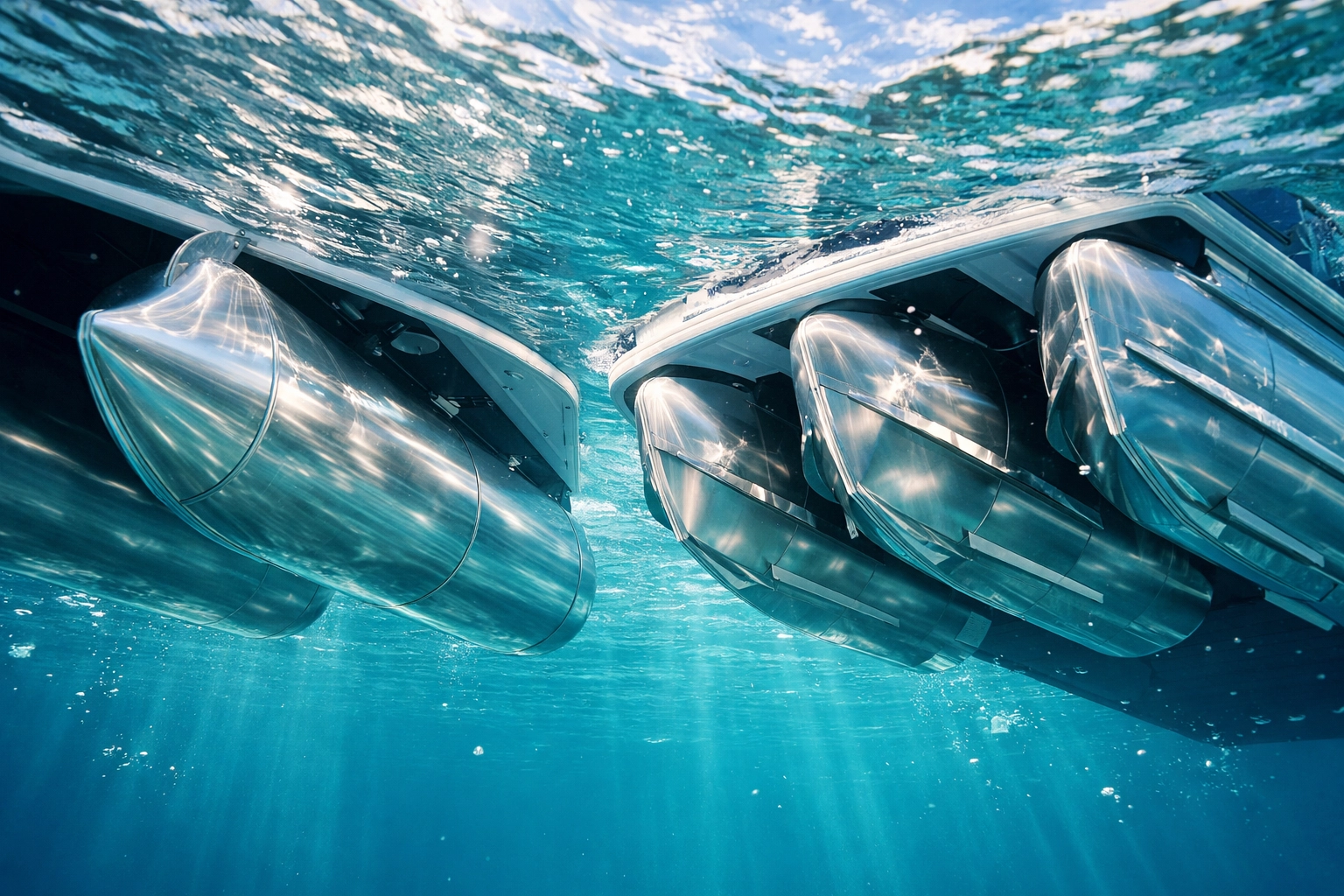
A tritoon, as the name suggests, adds a third aluminum tube right down the center. While it might sound like just “one more log,” that center tube completely changes the physics of the boat. In 2026, manufacturers are making these center logs more advanced than ever, often featuring “lifting strakes” that help the boat crest over the water rather than just plowing through it.
How Do They Handle the Water?
We get asked this all the time: “Does that third log really make a difference in how it drives?” The short answer is a resounding yes.
Handling the Chop
If you do most of your boating on a small, private pond or a quiet finger of a lake, a standard pontoon is going to feel like a dream. It’s smooth and stable. However, if your lake gets busy on Saturday afternoons: we’re talking about those big wakes from wakeboard boats and wind-driven chop: the two-log setup can start to feel a bit “floaty” or even take a dive into a wave.
Tritoons are designed to handle the rough stuff. Because they have more buoyancy and a different center of gravity, they “cut” through the water more like a traditional V-hull fiberglass boat. If you plan on navigating larger bodies of water or busy reservoirs in 2026, the tritoon offers a much more confident ride. We address many of these handling nuances in our guide on owning and operating your pontoon.
Stability at Rest
Both boats are champions of stability. Unlike a narrow fishing boat, you can have four people stand on one side of a pontoon boat without it tipping precariously. However, with the extra surface area of a third log, a tritoon is virtually a floating island. It barely budges when people jump off the side or move around the deck.
Speed and Horsepower: Finding Your Pace
This is where the tritoon really starts to pull away, literally.
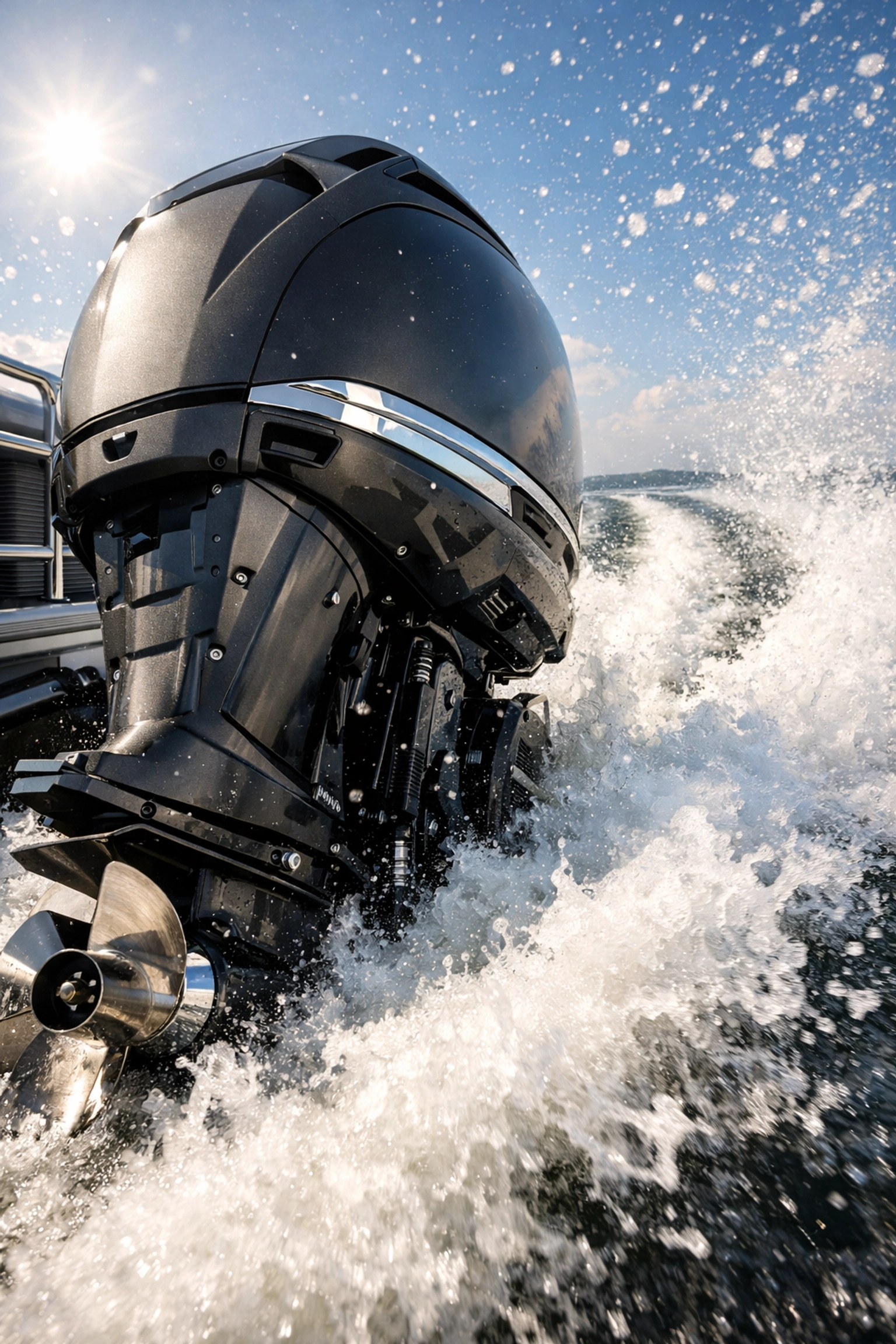
Because a traditional pontoon only has two points of contact with the water, it has a physical limit on how much weight and horsepower it can safely handle. Most standard pontoons in 2026 are paired with engines ranging from 40 HP to 115 HP. This is perfect for cruising at 15–20 mph, which is the “sweet spot” for a sunset tour.
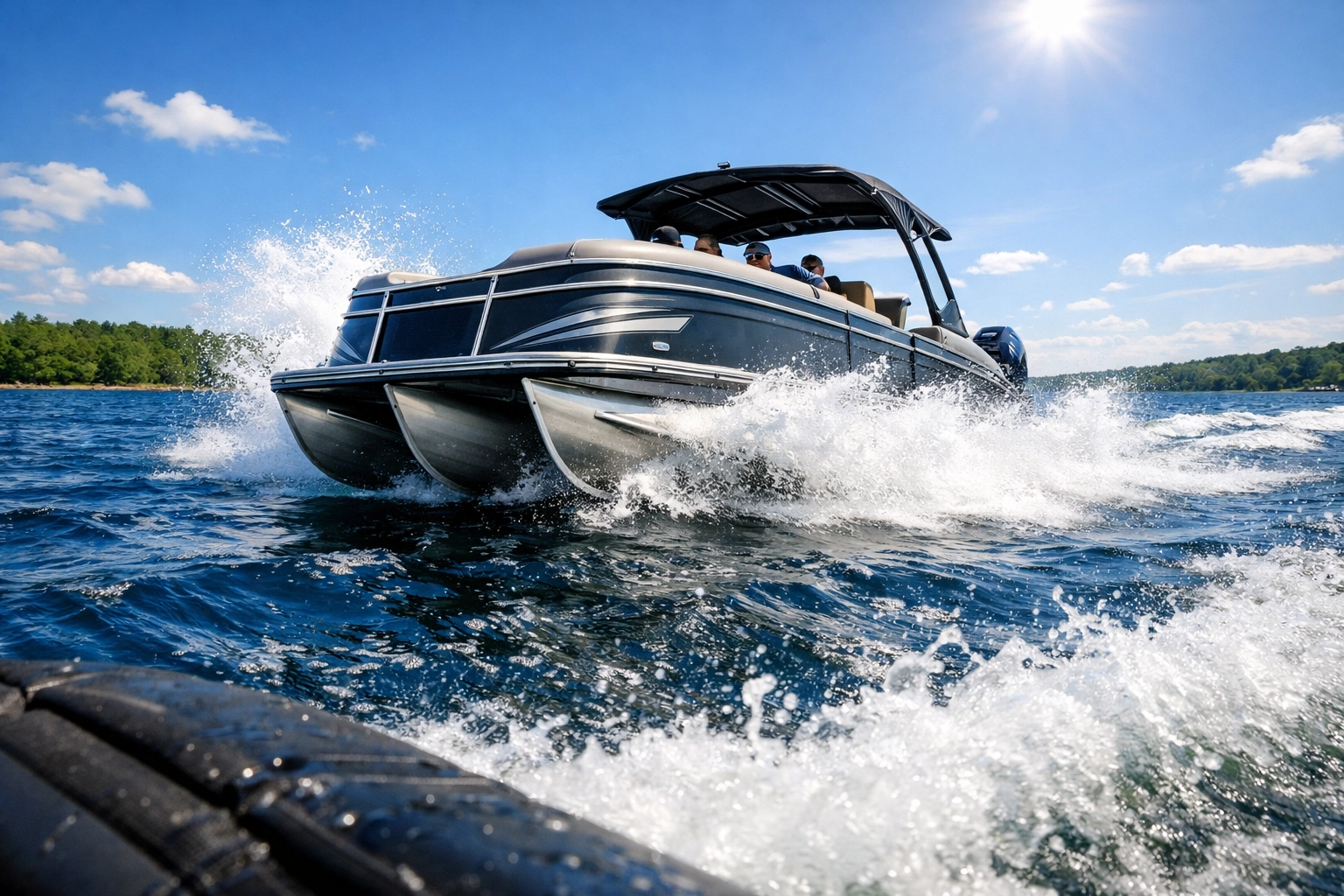
Tritoons, however, are built for power. The extra structural support of the third log allows for massive engines: often 150 HP to 350 HP, and sometimes even twin engines on high-end models. A tritoon can easily reach speeds of 40–50 mph.
Is a Tritoon Better for Water Sports?
If your family loves tubing, skiing, or wakeboarding, a tritoon is almost always the better choice. To pull a skier effectively, you need a boat that stays level and maintains speed through a turn. Tritoons bank into turns more like a sportboat, whereas a two-log pontoon tends to lean outward, which can feel a bit unstable at high speeds.
If you’re gearing up for a high-energy summer, don’t forget to check out our list of the 11 best towable tubes to make the most of that extra horsepower!
Passenger Capacity and Layout
How many friends are you planning to bring along? We know that the “more the merrier” rule usually applies to lake days, but your boat’s log configuration dictates your guest list.
- Standard Pontoons: Usually range from 16 to 22 feet. They are ideal for smaller groups of 6 to 10 people. They are lighter and easier to trailer, which is great if you move your boat between different lakes.
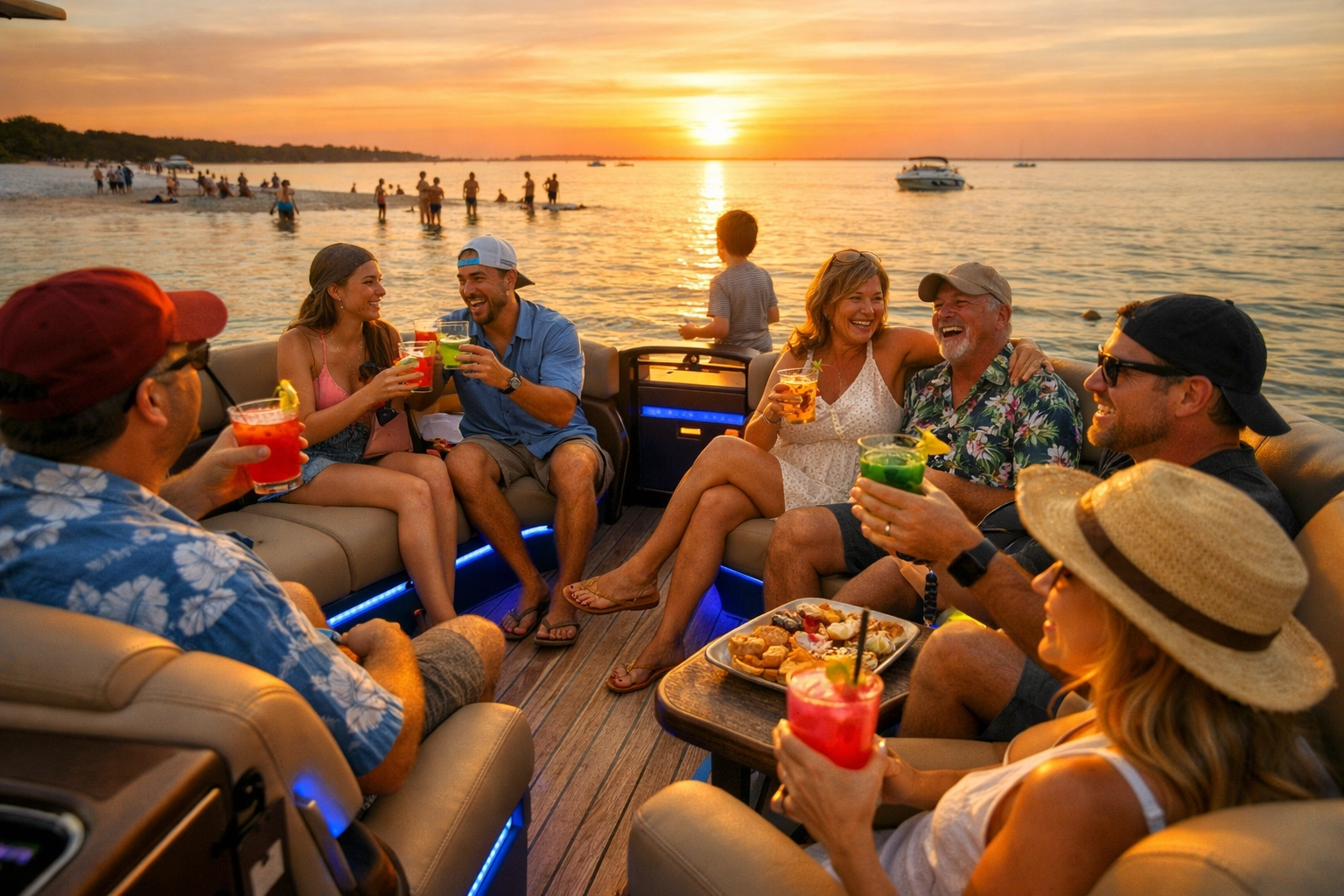
- Tritoons: These are often the “party buses” of the water. Because of the added buoyancy of the third log, they can support more weight. It’s common to see tritoons in the 23 to 27-foot range that can safely carry 12 to 15 passengers (and all their gear) without losing performance.
If you have a large extended family or you’re the designated host of the summer, the tritoon ensures nobody gets left on the dock.
Cost Considerations for 2026
We have to talk about the elephant in the room: the price tag. Buying a boat is a big investment, and we want to make sure you’re getting the most value for your hard-earned money.
Initial Purchase Price
Generally speaking, a tritoon will cost significantly more than a standard pontoon. You aren’t just paying for an extra piece of aluminum; you’re paying for the reinforced cross-members, the larger engine, and often higher-end interior features that come standard on tritoon packages. You can expect to pay anywhere from $10,000 to $25,000 more for a tritoon compared to a similarly sized pontoon.
Fuel and Maintenance
More horsepower means more fuel. If you’re running a 250 HP engine on a tritoon all weekend, your gas bill will be noticeably higher than someone puttering around with a 90 HP outboard. Additionally, maintenance for larger engines and the cleaning of three logs instead of two adds a bit more to your annual “to-do” list.
However, for many families, the “fun factor” and the ability to do water sports far outweigh the extra costs. If you’re looking for a budget-friendly entry into boating, a well-maintained two-log pontoon is still an incredible value.
Which One is Right for You?
Still on the fence? Let’s simplify it. We’ve found that most boaters fall into one of two camps.
Choose a Pontoon if:
- You mostly boat on calm, smaller lakes.
- Your primary goal is relaxation and “docktails.”
- You have a smaller group of passengers (under 10).
- You want to keep your initial investment and fuel costs lower.
- You don’t care much about high-speed water sports.
Choose a Tritoon if:
- You boat on large lakes or coastal areas where it gets choppy.
- You have a large family or frequently entertain big groups.
- Water sports (tubing, skiing) are a priority for the kids (or you!).
- You want the performance and handling of a fiberglass boat with the space of a pontoon.
- You have the budget for a larger engine and more features.
Getting Ready for the Season
Whichever path you choose, the goal is the same: making memories on the water. Once you’ve picked your boat, the real fun begins: customizing it! From upgraded sound systems to the perfect grill, we love seeing how owners transform their boats into a second home.
If you’re still in the research phase and want to see what’s available near you, head over to our Find Your Dream Pontoon Boat page. We’ve helped thousands of lake lovers navigate these waters, and we’re here to help you too.
Whether you go with two logs or three, 2026 is going to be an epic year on the lake. We’ll see you out there!