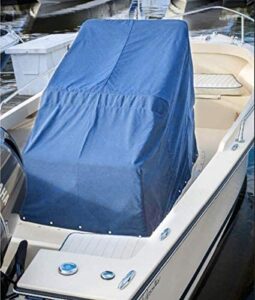
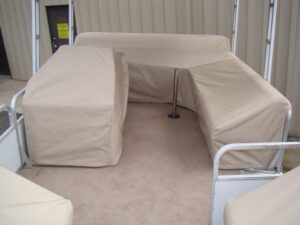
So, you’ve got a standard pontoon boat. Maybe it was built for leisurely Sunday cruises or hosting the neighborhood for a sunset happy hour. But lately, you’ve been looking at those glassy coves and thinking, “I bet there’s a massive largemouth bass hiding under that dock.”
We have good news for you: your “party barge” is actually a sleeping giant when it comes to fishing. Pontoons offer a level of stability, floor space, and comfort that traditional bass boats can only dream of. The best part? You don’t need to trade it in for a specialized rig. With a few strategic upgrades, we can help you navigate a complete pontoon boat fishing conversion that keeps the family happy while giving you the competitive edge on the water.
In this guide, we’re breaking down the five essential steps to transform your vessel into a pro fishing machine. From choosing the right trolling motor for your pontoon boat to optimizing your deck layout, we’ve got you covered.
Step 1: Precision Control with a Trolling Motor
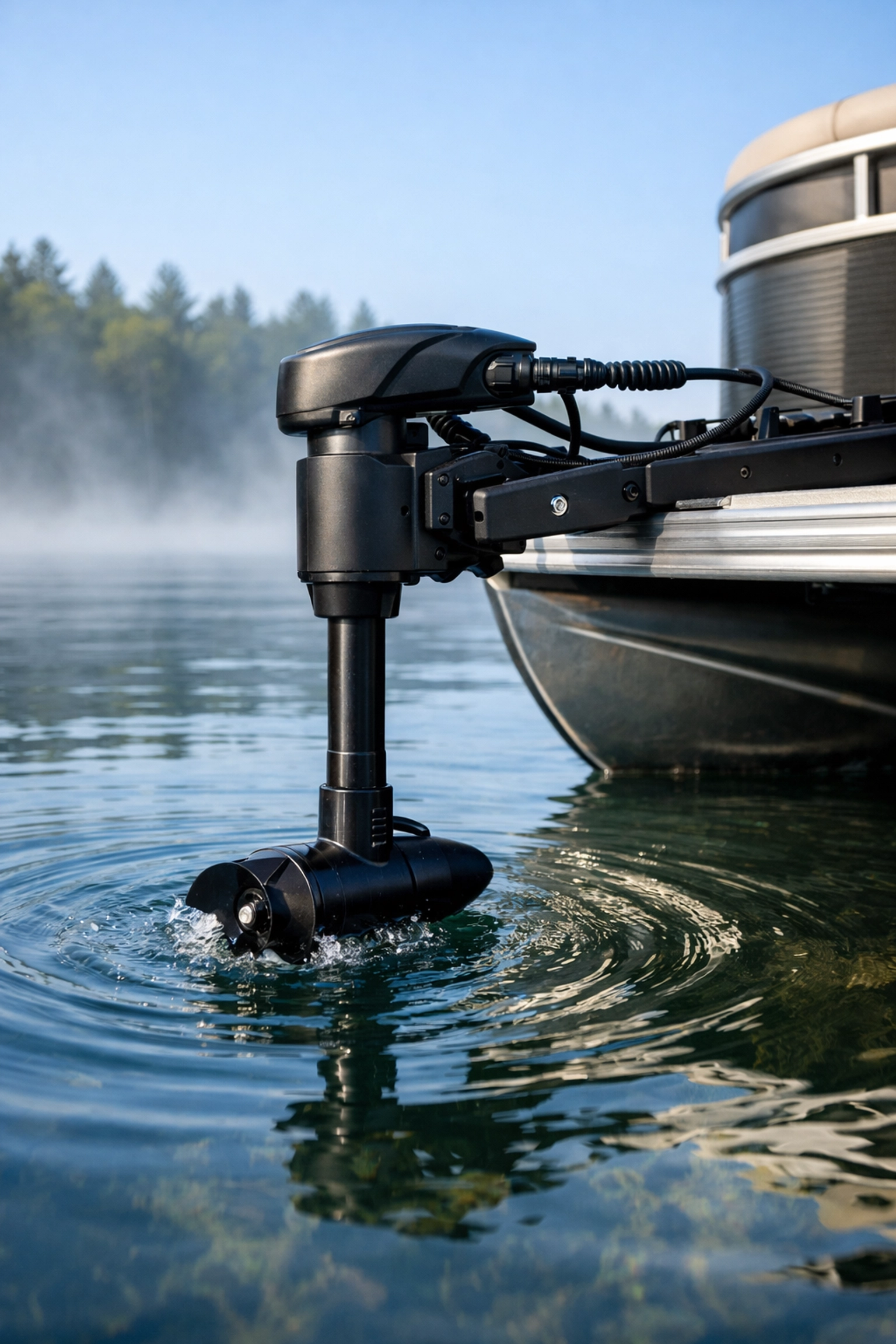
If there is one single upgrade that moves your boat from “leisure” to “pro,” it’s the trolling motor. Standard outboards are great for getting to the spot, but they are too loud and too powerful for fine-tuning your position once you’re there.
When selecting a trolling motor, we need to look at three main factors: Thrust, Voltage, and Shaft Length.
Calculating Your Thrust
The general rule of thumb is that you need at least 2 pounds of thrust for every 100 pounds of fully loaded boat weight (including fuel, gear, and people). For most standard 20- to 24-foot pontoons, we recommend looking at a motor with at least 80 pounds of thrust.
Voltage and Battery Power
- 12-Volt Systems: Best for smaller, lighter boats (under 18 feet).
- 24-Volt Systems: The industry standard for most pontoons. This requires two 12V batteries wired in series. It provides the stamina needed for all-day fishing.
- 36-Volt Systems: Reserved for large tritoons or those who fish in heavy currents and wind.
Shaft Length Matters
Because pontoons sit higher off the water than bass boats, a standard shaft will often “cavitate” (suck air) when the water gets choppy. We usually suggest a shaft length of at least 54 to 60 inches to ensure the propeller stays submerged, providing consistent power.
Step 2: High-Tech Eyes (Installing Electronics)
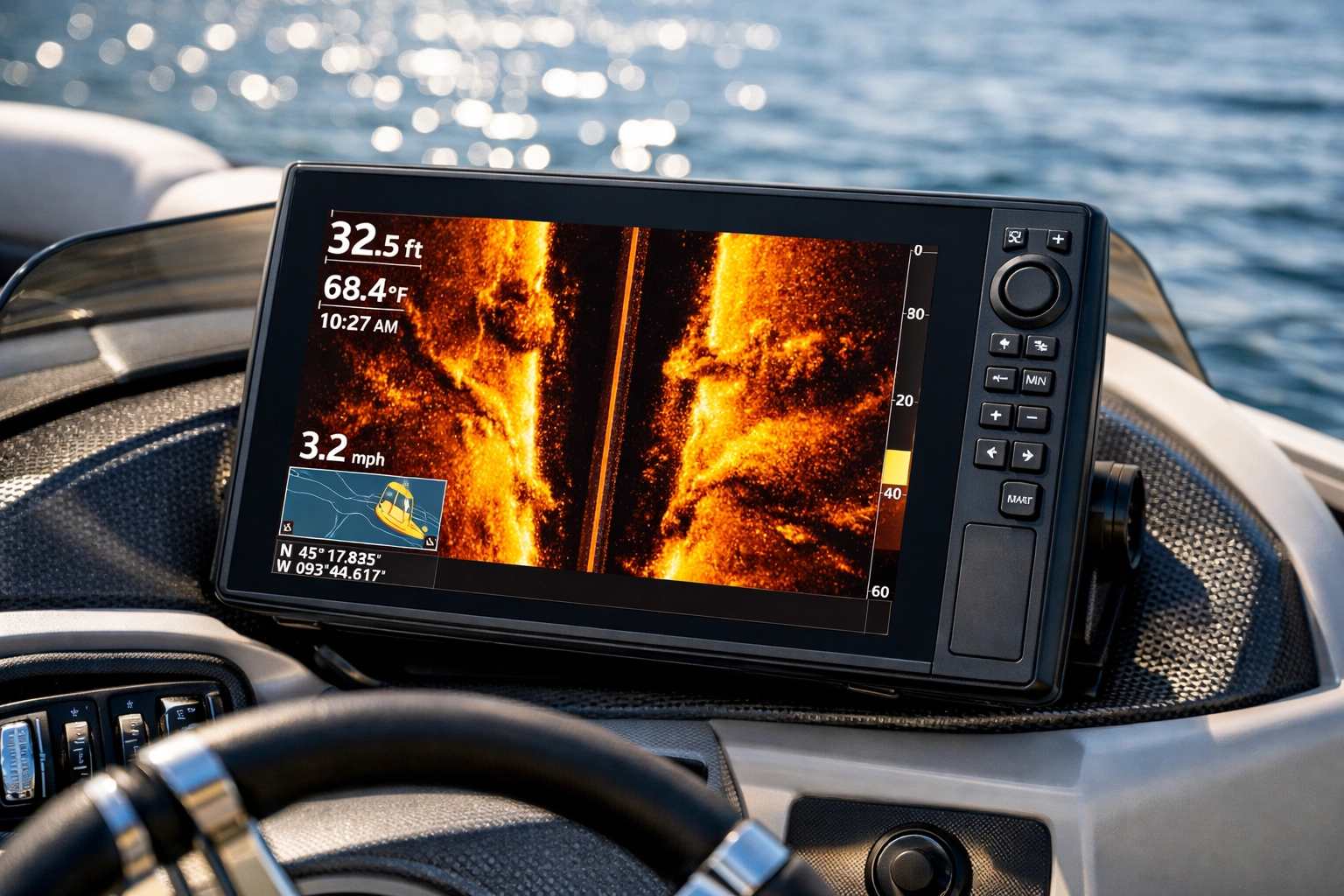
You can’t catch what you can’t find. Installing a high-quality fish finder (sonar) is the second most important step in your conversion. Modern electronics don’t just show you fish; they show you underwater structures, weed lines, and temperature changes.
Choosing Your Unit
For a pontoon, we recommend a unit with at least a 7-inch screen. Pontoons have a wide-open layout, and you’ll likely be viewing the screen from several feet away while standing at the rail.
- Down Imaging: Gives you a picture-like view of what is directly beneath the boat.
- Side Imaging: Scans up to 200 feet on either side of the logs. This is a game-changer for pontoons, allowing you to “scout” a massive area without driving right over the fish.
The Transducer Challenge
Mounting the transducer on a pontoon is a bit different than on a fiberglass hull. We suggest using a specialized transducer bracket on the back of one of the pontoons (usually the starboard side). Ensure it is mounted away from the motor’s prop wash to avoid “noise” on your screen. If you’re looking for more technical advice on boat maintenance, check out our guide on owning and operating your pontoon.
Step 3: Manage the Catch with a Livewell System
If you plan on keeping your catch or using live bait, you need a way to keep the water oxygenated. Many standard pontoons don’t come with a built-in livewell, but we address this problem with two easy solutions:
1. The Portable Livewell
For a quick and budget-friendly conversion, a portable aerated cooler is fantastic. These sit on the deck and plug into a 12V accessory outlet. They are easy to remove when you want to use the boat for “non-fishing” days.
2. The Integrated Bench Livewell
If you’re ready for a more permanent setup, you can replace one of your bow or stern lounge seats with a specialized fishing seat that has a built-in livewell underneath. This keeps the deck clear and gives the boat a factory-finished look. We recommend browsing our pontoon boat accessories section for seat replacement ideas.
Don’t forget the pump! A pro setup includes an aerator pump that constantly cycles fresh water into the tank, ensuring your bait stays lively and your trophies stay healthy until you get back to the dock.
Step 4: Rod Holder Placement and Strategic Seating
Efficiency is the name of the game. If your rods are tangled in a pile on the floor, you aren’t fishing; you’re managing a mess.
Rail-Mounted Rod Holders
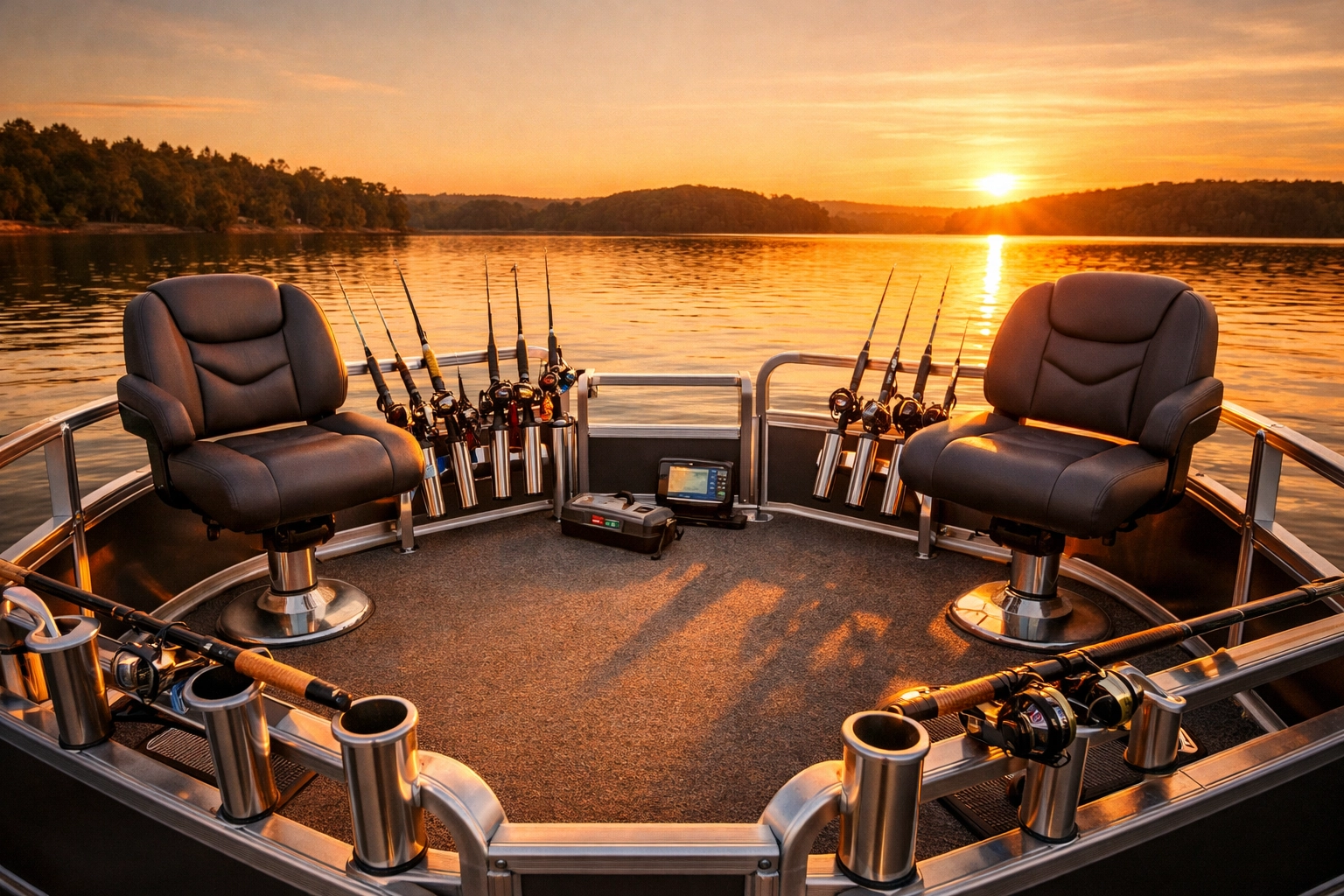
Pontoons are unique because they are surrounded by 1.25-inch square railings. This is the perfect mounting surface for pontoon boat fishing accessories. We suggest installing at least four rail-mounted rod holders: two at the bow and two at the stern. This allows you to troll or “dead stick” multiple lines at once.
Swivel Fishing Chairs
Standard lounge seating is comfortable, but it’s terrible for casting. To truly turn your boat into a fishing machine, we suggest adding one or two pedestal swivel chairs to the front or rear corners of the deck. This gives you a 360-degree casting radius and puts you at the perfect height for flipping lures into tight spots.
Step 5: Tackle Organization and Workspace
A cluttered deck is a safety hazard. When the bite gets hot, the last thing you want is to be tripping over tackle boxes or searching for your pliers.
Dedicated Tackle Storage
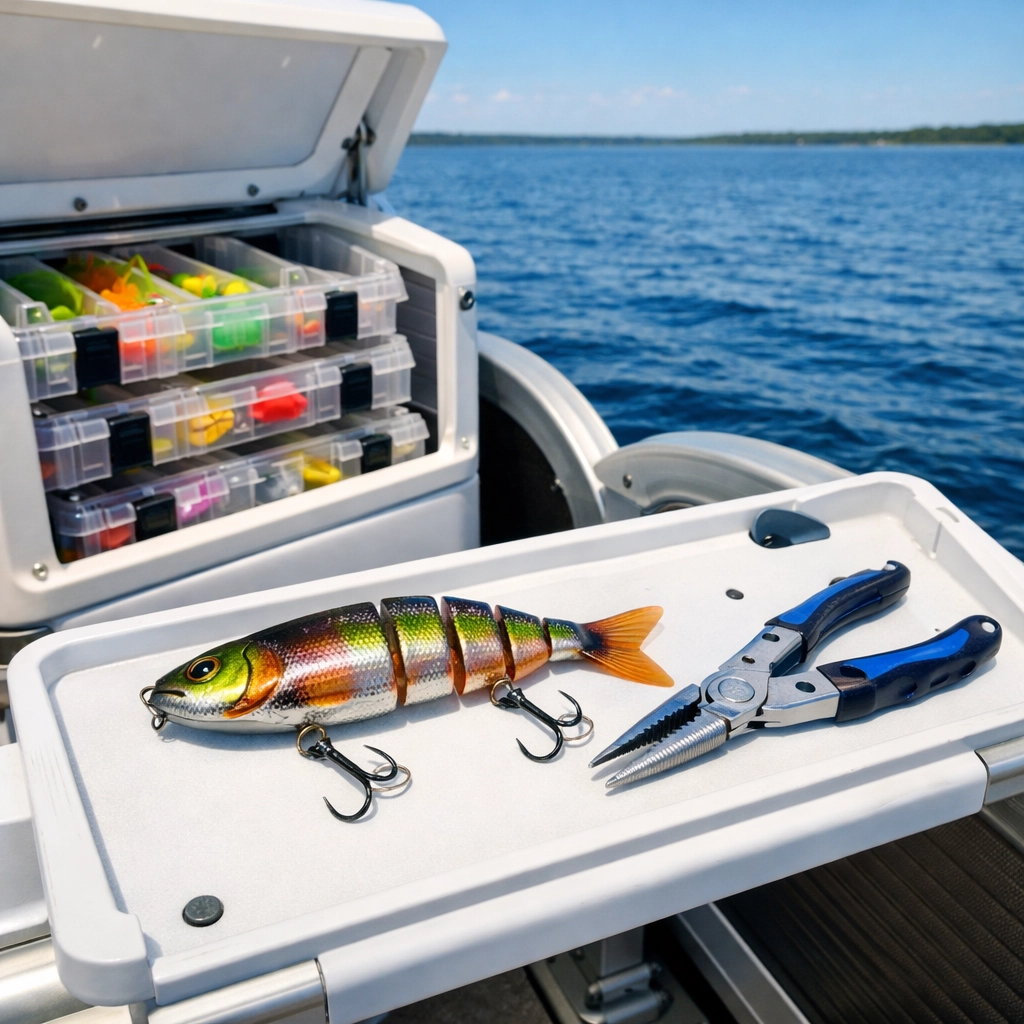
We recommend utilizing the space under your seats. Many manufacturers make tackle-tray inserts that fit perfectly into the storage compartments of your pontoons. By dedicating one “zone” of the boat to tackle, you keep the rest of the deck clear for movement.
The Fillet Station
Adding a small, removable cutting board or “fillet station” that mounts directly to the railing is a pro move. It gives you a clean surface to prep bait or clean fish without getting scales and slime all over your vinyl seats. We’ve found that a well-organized workspace makes the transition from “fishing” to “cruising” much faster at the end of the day.
Is Your Pontoon Ready for the Pro Circuit?
By following these five steps, you’ve effectively taken a standard recreational boat and turned it into a versatile, high-performance fishing platform. You have the stealth of a trolling motor, the vision of high-tech sonar, and the organization of a professional rig.
We understand that every boat and every fisherman is different. Whether you are targeting panfish with the grandkids or chasing tournament-grade stripers, the modular nature of a pontoon allows you to customize your setup to fit your specific needs.
If you’re still in the research phase and trying to decide if a pontoon or a tritoon is the better starting point for your fishing journey, take a look at our deep dive into Tritoon vs. Pontoon. And if you decide you’d rather start with a boat that’s already rigged for the water, we can help you find your dream fishing pontoon.
We’ve got a whole library of resources waiting for you in our Fishing Category. So, grab your gear, head to the lake, and let us know how your conversion goes. We’ll see you on the water!