For years, the "old-school" wisdom was that boats are a hole in the water where you throw your money. But as we move through 2026, the landscape for pontoon boats has shifted dramatically. Whether you are looking to buy your first family cruiser or considering trading in your current rig, you probably have one big question: "Are used pontoon boats a bad investment right now?"
We hear this question every day at PontoonBoats.org. The truth is, while the "wild west" pricing of the early 2020s has settled, pontoon boats remain one of the most resilient segments in the entire marine industry. We address all these questions and more in this deep dive into the 2026 resale market.
What Is the Current State of the Pontoon Market in 2026?
As of mid-2026, we are seeing a "normalization" of the market. The frantic, high-urgency buying of a few years ago has been replaced by a more stable, selective environment. However, "stable" doesn't mean "weak."
Recent data shows that demand for pontoon boats is actually outpacing many other boat categories, with finance and insurance traffic up nearly 12% year-over-year. Why? Because the pontoon is no longer just a "slow party barge." Modern tritoons and high-performance models have replaced traditional bowriders and even some ski boats for many families.
We see that buyers in 2026 are looking for value. They are more patient, but they are still willing to pay a premium for a well-maintained, brand-name boat. This makes the used market a vibrant place where smart buyers can find incredible deals and sellers can still recoup a significant portion of their initial cost.
Understanding the "Real" Depreciation Curve
One of the most important things we tell our community is to look at the numbers realistically. Every boat depreciates, but pontoons follow a very specific pattern.
- Year One: Typically, a brand-new pontoon will lose between 20% and 30% of its value the moment it leaves the lot.
- Year Two: You can expect another 10% to 20% drop from the current value.
- Years Five through Ten: This is where the curve flattens out. Depreciation usually slows to about 10% to 15% per year.
In 2026, because new boat prices have continued to climb, these older, well-maintained vessels are holding their value remarkably well. A five-year-old boat from a top-tier manufacturer like Bennington or Barletta often sells for a price that would have shocked us a decade ago. We have you covered if you're trying to find your dream pontoon boat without the "new boat" sting of that first-year depreciation.
Why Pontoons Hold Value Better Than Other Boats
You might wonder why a used pontoon often holds its value better than a similarly priced fiberglass runabout. It comes down to three main factors:
1. Versatility and Broad Appeal
A pontoon is a Swiss Army knife. It’s a fishing platform in the morning, a swim platform in the afternoon, and a sunset dinner cruiser in the evening. Because so many different types of boaters want them, the pool of potential buyers for your used boat is much larger than it would be for a specialized wake-surf boat.
2. Durability of the "Platform"
Unlike fiberglass hulls that can suffer from osmotic blistering or structural rot if not cared for perfectly, the aluminum logs of a pontoon are incredibly durable. As long as the logs aren't punctured and the engine is serviced, the "bones" of the boat stay solid for decades.
3. Ease of Rejuvenation
It is much easier to replace the "soft goods" on a pontoon than on almost any other boat. If the vinyl seats get cracked or the flooring looks dated, we can help you find pontoon boat accessories to make it look brand new again. This modular nature keeps used values high because buyers know they can easily customize or refresh the boat.

The "Sweet Spot": Buying 2-5 Year Old Pontoons
If you are looking for the best "investment," we almost always recommend looking at boats in the 2 to 5-year-old range. By this point, the original owner has already eaten the largest chunk of depreciation.
In 2026, these boats are often equipped with modern features like digital helms, integrated GPS, and fuel-efficient four-stroke outboards, but they come at a significant discount compared to a 2027 model-year boat. We address these buying strategies in our guide to owning and operating your pontoon.
How to Protect Your Investment (And Your Resale Value)
If you already own a boat and want to ensure it’s not a "bad investment" when you go to sell it in 2028 or 2030, you need to be proactive. In the 2026 market, buyers are savvy; they check maintenance logs and look at the fine details.
- Document Everything: Keep every receipt for every oil change and winterization. A documented service history can add thousands to your resale price.
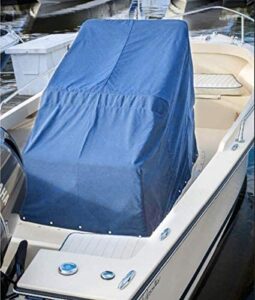
- Invest in Protection: A high-quality cover is the single best investment you can make. Sun damage to vinyl is the #1 value-killer. We recommend checking out our specialized pontoon boat covers to keep your interior mint.
- Trailer and Storage Care: How you store your boat matters. Using boat lifts keeps the logs clean and free of algae or calcium buildup, which is a major selling point for used buyers.

Are Certain Brands Better Investments?
Not all pontoons are created equal when it comes to the secondary market. In 2026, "premium" brands continue to dominate resale rankings.
Names like Bennington, Barletta, Harris, and Avalon consistently fetch higher prices on the used market. These manufacturers use higher-grade aluminum, thicker vinyl, and more robust deck construction. While they cost more upfront, the "cost of ownership" (Price Paid – Resale Value) is often lower than that of a budget-tier boat that loses its luster and value much faster.
Upgrading Your Way to a Better Sale
Sometimes, a used boat is a "bad investment" simply because it feels dated. We often see owners "flip" their own boats for a profit by making a few strategic upgrades.
In 2026, buyers are looking for:
- Updated Electronics: Swapping an old 5-inch fishfinder for a modern 9-inch touchscreen GPS can drastically change the "feel" of the helm.
- Premium Lighting: Adding LED underwater lights or interior accent lighting is a relatively low-cost way to make a 2018 boat look like a 2026 model.
- Flooring: Replacing old carpet with woven vinyl or "sea-dek" style foam flooring is the single biggest upgrade you can do for resale value.

The Verdict: Is a Used Pontoon a Bad Investment?
So, back to the big question. In 2026, is a used pontoon a bad investment?
The answer is a resounding no: provided you buy smart.
If you buy a high-quality brand that is 3-4 years old, maintain it meticulously, and keep it covered, you are likely to enjoy years of family memories while retaining 70-80% of what you paid for it. In the world of recreational vehicles, that is about as good as it gets.
We are here to help you through every step of that journey. From picking the right model to finding the best gear to keep it in top shape, we have you covered.

Ready to take the next step?
- Browse our Pontoon Boat Accessories to upgrade your current ride.
- Check out our latest Trailer Guides to ensure your boat is safe on the road.
- Need help choosing? Explore the best pontoon boats for 2026.