The birds are chirping, the ice has finally retreated into the depths of the lake, and if you listen closely, you can almost hear the sound of a cold beverage being cracked open on a sun-drenched deck. It’s spring, and for those of us obsessed with pontoon boats, this is the most wonderful time of the year.
But wait. Before you back that trailer down the ramp and pray to the gods of internal combustion, we need to talk. We’ve all seen it: the “Ramp of Shame.” That’s where a perfectly good Saturday is ruined because the engine won’t turn over, the bilge is full of last year’s rainwater, or you realize you left the life jackets in the garage.
At Pontoonboats.org, we want to make sure your first outing is a victory lap, not a rescue mission. We’ve put together this 10-step minimalist guide to waking up your boat. We’re stripping away the fluff and focusing on what actually matters to get you off the trailer and onto the waves faster.
1. The Great Unveiling (and Critter Check)
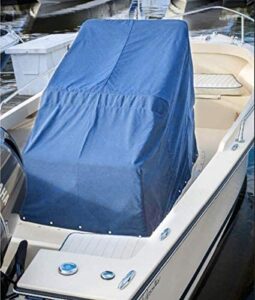
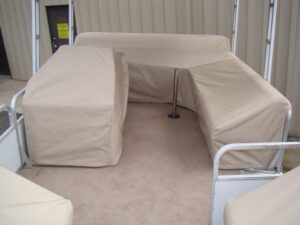
The first step is always the most satisfying. Peeling back those pontoon boat covers is like opening a giant present to yourself. However, it’s also the moment of truth.
While your boat was sleeping, local wildlife might have decided your captain’s chair was the perfect place for a winter condo. Check under the seats and inside the console for nests or chewed wires. If everything looks clear, give the cover a good cleaning and let it dry completely before folding it away. A moldy cover in June is a mistake you only make once.
2. The Spark of Life: Battery Health
If you followed our advice on winterizing a pontoon boat, your battery has been sitting on a tender in a climate-controlled room. If you didn’t… well, we’re here to help you move forward.
Check the terminals for that funky blue-green corrosion. A bit of baking soda and water with an old toothbrush will clean that right up. Charge it fully and, if you have a multimeter, check the voltage. A healthy battery should sit right around 12.6V. If it’s struggling to hold a charge, buy a new one now. Trust us, trying to jump-start a boat in the middle of a crowded marina is not the “cool” look we’re going for this season.
3. Fuel, Oil, and the “Go-Juice”
Gasoline doesn’t age like a fine wine; it ages like milk. If you didn’t add a stabilizer in the fall, that fuel might be a bit “stale.”
- Check the levels: Top off the tank with fresh, high-octane fuel to dilute any older gas.
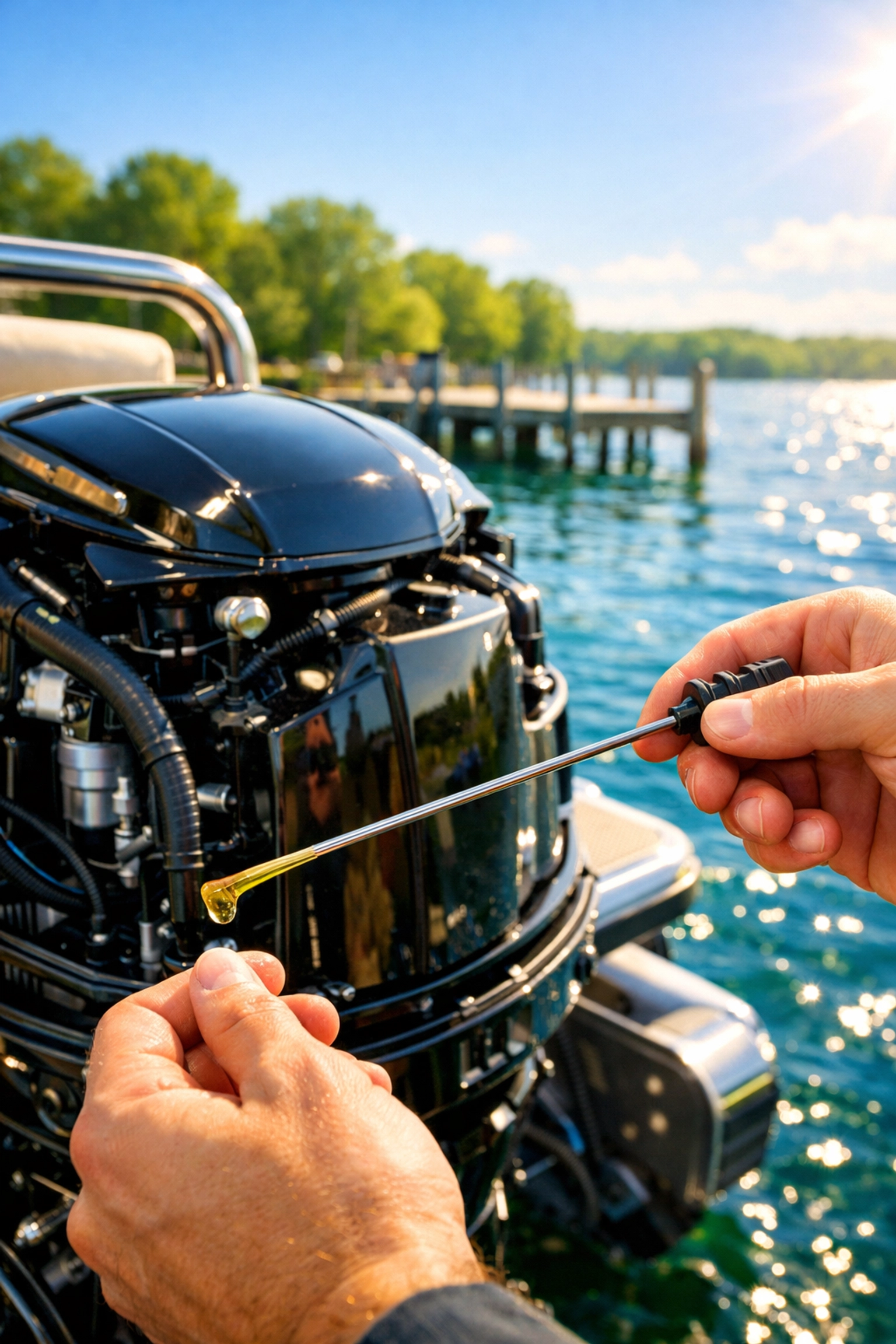
- Check the oil: Pull the dipstick. If the oil looks like chocolate milk, you’ve got water in the system, and you need to call a pro. If it’s just dark, it’s time for a quick change.
- Check the filters: Ensure your fuel-water separator is clean.
4. The Propeller: Don’t Get Caught Tangled
We address this every year because it’s so easy to overlook. Take a close look at your prop. Are there any major dings or cracks? A bent prop doesn’t just slow you down; it creates vibrations that can destroy your lower unit seals.
More importantly, look behind the prop. Is there a nest of old fishing line wrapped around the shaft? That line can cut right through a seal, leading to an expensive repair. Pop the prop off, grease the shaft, and put it back on. It takes five minutes and saves you five hundred dollars.
5. Bilge and Pumps: Keeping the Outside Out
Even the most high-end fast pontoon boats need to stay dry. Check your bilge pump by manually flipping the float switch. You should hear that beautiful whirring sound.
While you’re down there, check your livewell pumps too. Nothing ruins a fishing trip faster than a livewell that turns into a stagnant pond because the pump seized up over the winter. If you’re looking to upgrade your setup this year, check out our guide on fishing pontoon boat accessories.
6. Steering and Electronics (The Brains)
The steering should be smooth. If it feels like you’re trying to turn a boat through a vat of cold molasses, you likely need to grease the steering cable or check your hydraulic fluid levels.
Fire up your GPS and fish finder. Do they need a software update? Better to do that in your driveway while connected to your home Wi-Fi than at the dock where the signal is spotty and everyone is waiting on you.
7. The Safety Gear “Vibe Check”
Safety gear isn’t just a legal requirement; it’s your lifeline.
- Life Jackets: Check for mold, rips, or broken buckles. Ensure you have enough for your maximum capacity.
- Fire Extinguisher: Check the gauge. If it’s in the red, it’s a paperweight. Get a new one.
- First Aid Kit: Did you use all the Band-Aids last July? Restock it now.
We have you covered with a full list of essential pontoon boat accessories if you realize your kit is looking a little thin.
8. Minimalist Gear Sorting: Ditch the Junk
Here is where we get “minimalist.” Over the years, pontoon boats tend to accumulate stuff. Old towels, half-empty bottles of sunscreen from 2022, rusted anchors, and broken noodles.
Empty every storage compartment. If you haven’t used it in two seasons, it doesn’t belong on the boat. A lighter boat is a faster, more fuel-efficient boat. Organize your remaining gear into clear bins so you can find the dock lines exactly when you need them. If you find your seats are looking a bit weathered after the purge, check out some replacement furniture options.
9. The Trailer: The Unsung Hero
You can’t get to the water if your trailer fails halfway there. We see more people stranded on the side of the highway than we do on the lake.
Check your pontoon boat trailers for the “Big Three”:
- Tires: Check for dry rot and ensure they are at the correct PSI.
- Bearings: Give them a fresh shot of marine grease.
- Lights: Have a partner stand behind the trailer while you test the brakes and blinkers.
10. The Float Plan and First Launch
Before you head out, tell someone where you’re going and when you’ll be back. Even a quick text to a friend counts as a float plan.
For the first launch of the year, we recommend a “dry run” in the driveway. Hook up the muffs, turn on the hose, and let the engine idle for a few minutes. If there’s a problem, you want to find it in your yard, not at a busy boat ramp with a line of impatient people behind you.
Once you’re at the water, take it easy for the first 20 minutes. Listen for weird noises, check the gauges, and make sure everything is humming along as it should.
We Have You Covered
Getting your boat ready shouldn’t be a chore that lasts all weekend. By following this minimalist, 10-step approach, you’re focusing on the essentials of safety and performance. You’re clearing out the clutter and making room for what actually matters: memories with your friends and family.
Whether you’re rocking a brand new Apex Marine or a classic Sun Tracker, the goal is the same: sun, water, and zero stress.
If you find you need more specialized gear, from anchors to Bimini tops, we address all these needs in our detailed category guides. Now, go get that boat out of storage( the lake is calling!)