Buying a used pontoon boat is one of the smartest ways to get your family out on the water without the "new boat" price tag. We see it every day: a family finds a great deal, spends their weekends cruising the lake, and builds memories that last a lifetime. However, we also see the other side of the coin: the "great deal" that turns into a permanent resident of the local repair shop.
The difference between a dream boat and a money pit usually comes down to what you check before the money changes hands. We’ve guided countless buyers through this process, and we’ve noticed seven recurring mistakes that can cost you thousands.
In this guide, we address all these questions so you can shop with confidence. Whether you are a seasoned veteran or looking for your first dream pontoon boat, we have you covered.
1. Ignoring the "Vital Organs" (The Engine)
The outboard engine is often the most expensive component of your purchase. A common mistake we see is buyers falling in love with a clean interior while completely ignoring what’s under the cowling.
We recommend always checking for service records. If a seller can't tell you when the oil was last changed or the impeller was replaced, that’s a red flag. Furthermore, stay away from "orphaned" engines: older models from brands that no longer exist or have limited parts availability.
How to avoid the pit:
- Perform a compression test on all cylinders.
- Check the lower unit oil for milkiness (a sign of water intrusion).
- Stick to reputable brands like Mercury, Yamaha, or Honda, where parts are easy to find.
2. Overlooking Deck Integrity (The Hidden Rot)
Most people look at the floor, but we want you to look under it. Many older pontoon boats used marine-grade plywood that, while durable, can eventually rot if not properly maintained or if kept in a high-moisture environment without a good cover.
Walking around the deck and feeling for "spongy" spots is a start, but it isn't enough. We suggest getting on your hands and knees (or using a trailer) to look at the underside of the deck.
How to avoid the pit:
- Look for dark, soft wood or cross-members that are bent or corroded.
- If the boat has carpet, smell for heavy mildew, which often signals trapped moisture in the wood.
- We cover more on structural longevity in our guide to owning and operating your pontoon.
3. Missing Hidden Pontoon Damage
The aluminum tubes (the "pontoons") are the literal foundation of your boat. A mistake many beginners make is assuming that because a boat is on a trailer, the tubes are airtight.

We’ve seen tubes with "repaired" cracks that were just covered with marine epoxy, or worse, tubes that have water sloshing inside them. If you hear water moving when the boat is tilted, you have a leak.
How to avoid the pit:
- Inspect every weld along the length of the tube.
- Check for "pitting" in the aluminum, especially if the boat was used in saltwater.
- If you’re worried about saltwater longevity, check out our insights on saltwater pontoon boats.
4. Not Verifying Ownership and Paperwork
It sounds boring, but the paperwork is where many deals fall apart. We frequently hear stories of buyers who purchased a boat only to find out the seller didn't have the title for the trailer, or the Hull Identification Number (HIN) didn't match the registration.
In many states, registering a boat without a clean title is a bureaucratic nightmare that can keep you off the water for months.
How to avoid the pit:
- Match the HIN on the starboard (right) side of the rear transom to the paperwork.
- Ensure the trailer has its own separate title or registration if required in your state.
- Check for any outstanding liens on the vessel.
5. Skipping the Sea Trial
"It ran great last summer" is a phrase we hear far too often. Never buy a boat without seeing it run under load in the water. An engine can sound perfect on a garden hose in a driveway but fail completely when it has to push 2,500 pounds of boat through the water.
How to avoid the pit:
- Take it for a 20-minute test drive.
- Watch the temperature gauge and ensure the "tell-tale" (the stream of water from the engine) is strong.
- Check the steering: if it's stiff, you might be looking at a costly cable or hydraulic repair.
6. Budgeting Only for the Boat (Ignoring the "Hidden Costs")
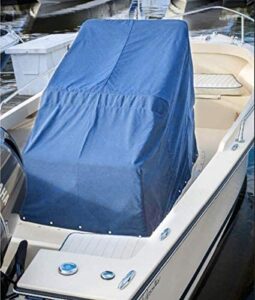
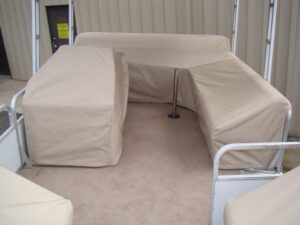
Buying a boat is just the entry fee. We see many owners get "sticker shock" when they realize they need a trailer, a custom cover, and a full set of safety gear.

If the used boat you're looking at doesn't come with a trailer, you need to factor in an extra $3,000–$5,000. If the cover is shredded, that’s another $600–$1,200. These are the things that turn a "bargain" into a "break-even" real quick.
How to avoid the pit:
- Account for the cost of pontoon boat covers and trailers in your offer.
- Check the condition of the pontoon boat accessories like life jackets, anchors, and dock lines.
7. Buying for the Price, Not the Purpose
The biggest mistake is buying a boat that doesn't fit your lifestyle just because it's cheap. If you have a family of 12 but buy a 16-foot boat with a 40hp engine, you’re going to be miserable.

We recommend deciding how you will actually use the boat before you start looking. Are you fishing? Hosting large parties? Towing tubers? Each of these requires a different pontoon boat layout and engine size.
How to avoid the pit:
- If you want speed and stability for large groups, look into the tritoon vs. pontoon debate.
- Ensure the boat's capacity plate matches your typical passenger load.
The Reality of a Project Boat
Sometimes, you want a project. There is a certain pride in taking a "vintage" pontoon and bringing it back to life. However, you must go into it with eyes wide open.
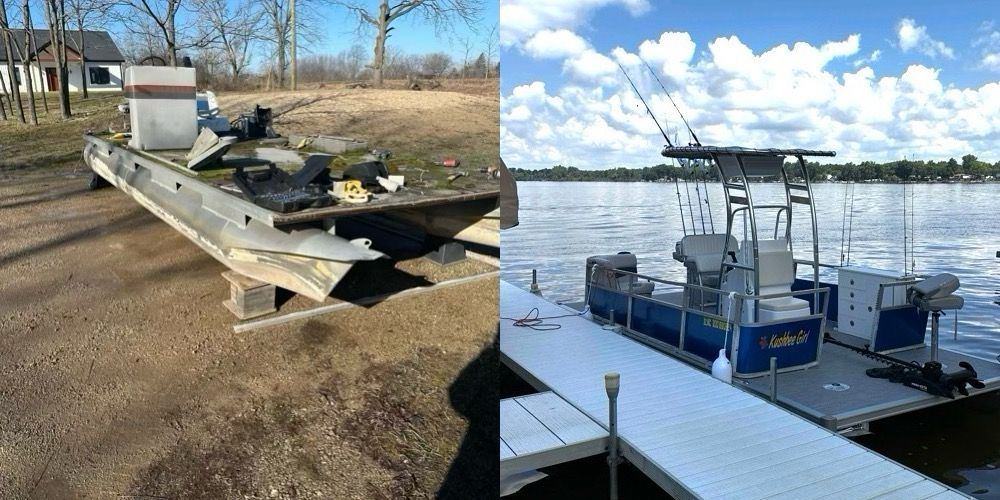
As shown in the restoration above, the transformation can be incredible, but it requires a significant investment in time and materials. If you aren't ready for a full deck-up rebuild, stick to boats that have been well-maintained by their previous owners.
We Have You Covered
Navigating the used market can be tricky, but you don't have to do it alone. From choosing the best pontoon boats for your needs to finding the right accessories, we provide the comprehensive information you need to make the right choice.
Don't let a "money pit" ruin your lake season. Take your time, use our checklists, and soon you'll be the one enjoying the sunset from the best seat on the water.