If you’ve spent any time at the local marina or scrolling through boating forums lately, you’ve probably noticed a heated debate that refuses to die down: Tritoon vs. Pontoon. It’s the talk of the lake, and for a good reason. For decades, the classic two-log pontoon boat was the undisputed king of leisurely afternoon cruises and family picnics. But recently, the tritoon: a three-log evolution: has completely shifted the landscape of what we expect from a day on the water.
At Pontoonboats-org, we get asked about this comparison more than almost anything else. Is that third log really worth the extra investment? Does it actually change how the boat handles, or is it just a marketing gimmick? We’re here to break down the performance specs, the handling nuances, and the lifestyle benefits so you can decide which hull configuration fits your needs. Whether you’re looking for a relaxing fishing platform or a high-speed machine, we have you covered.
What Exactly is the Difference?
Before we dive into the performance data, let’s clear up the basics. A traditional pontoon boat sits on two aluminum tubes (logs). This design provides a flat, stable platform that is perfect for calm water and slow-to-moderate speeds. It’s the classic "floating patio" that many of us grew up with.
A tritoon, as the name suggests, adds a third aluminum tube right down the center. This might seem like a small addition, but from an engineering perspective, it changes everything. That extra log provides significantly more buoyancy, allows for much larger engines, and alters the physics of how the boat interacts with the water. When we talk about best pontoon boats in the modern era, the conversation almost always leans toward how that third log affects the overall experience.
The Need for Speed: Horsepower and Acceleration
One of the biggest reasons everyone is talking about tritoons is the massive jump in power. Let’s face it: sometimes you want to get where you’re going a little faster.
On a standard two-log pontoon, you’re usually capped by the weight of the engine. Because there’s less buoyancy at the stern, a massive 300 HP motor would likely cause the back of a two-log boat to sit too low in the water. Most traditional pontoons max out between 90 HP and 150 HP. This is plenty for cruising at 15-25 mph, but it won’t exactly pin you to your seat.
Tritoons change the game. Because that third center log provides so much extra lift, manufacturers can slap on much larger outboards. It’s common to see tritoons pushing 250, 300, or even 400 horsepower. If you are looking for fast performance, a tritoon is the only way to go. You aren’t just looking at a slightly higher top speed; you’re looking at a boat that can reach 40-50 mph or more, making it competitive with traditional fiberglass V-hull boats.

Handling and "The Banking Effect"
This is where the performance talk gets really interesting. If you’ve ever turned a traditional two-log pontoon at high speed, you know the feeling: the boat tends to lean outward, away from the turn. It’s a bit like driving a truck with soft suspension. It’s stable, but it’s not exactly "nimble."
Tritoons handle more like a traditional runabout or a racecar. Because the center log is often mounted slightly lower than the outer logs (a design often called a "V-hull configuration"), the boat actually banks into the turn. This makes for a much smoother, more controlled maneuver.
We address the "why" behind this frequently: it’s all about weight distribution and hydrodynamic lift. For those of you who love watersports: tubing, skiing, or wakeboarding: this handling is a game-changer. You can cut sharp corners to give the kids a thrill on the tube without feeling like the boat is going to slide or tip awkwardly.
Tackling the Rough Stuff: Stability in the Chop
If you’ve ever been caught in a sudden summer squall on a large lake, you know how quickly things can get bumpy. This is where the tritoon vs. pontoon debate really hits home for safety-conscious boaters.
Traditional pontoon boats are fantastic on glass-calm water. However, because they only have two points of contact with the water, they can struggle in heavy chop. They tend to "hobby-horse" (rock front to back) or get pushed around by side waves.
The third log on a tritoon acts as a stabilizer. It cuts through the waves rather than just riding over them. It adds weight and "footprint" to the water, meaning the boat stays much flatter and more composed when the wind picks up. We’ve found that for boaters on large bodies of water like the Great Lakes or busy coastal bays, the added security of a tritoon is often the deciding factor. It extends your boating season and your "boating days" because you don’t have to head for the dock the second a few whitecaps appear.

Capacity and the "More Friends" Factor
Let’s talk about the social side of performance. Performance isn't just about speed; it's about how much weight you can carry without sacrificing your ride quality.
A tritoon can typically carry significantly more weight than a dual-log boat of the same length. Think about it: you’re adding roughly 33% to 50% more buoyancy. This means you can have 12 friends on board, a full tank of gas, and all your accessories without the boat feeling sluggish or sitting dangerously low.
On a two-log boat, as you add more people, the performance drops off a cliff. The logs sit deeper, creating more drag, and the engine has to work twice as hard. With a tritoon, the extra lift keeps the hull on top of the water, maintaining that crisp performance even when the party is in full swing.
The Role of Tech: Lifting Strakes and Underskinning
When we discuss performance, we have to mention the "invisible" upgrades that often come standard on high-performance tritoons.
- Lifting Strakes: These are small metal fins attached to the sides of the logs. They act like tiny wings, pushing the boat up out of the water as you gain speed. This reduces drag and increases top speed.
- Underskinning: This is a smooth aluminum sheet that covers the cross-members under the deck. On a standard boat, water splashes up and hits those cross-members, acting like a brake. Underskinning allows the water to slide right under the boat, making the ride quieter and faster.
Most performance tritoons come with these features out of the box, whereas they might be an expensive add-on (or not available at all) for basic two-log models.
Is the Investment Worth It?
We won't sugarcoat it: tritoons are more expensive. You’re paying for more aluminum, a larger engine, and often a more robust trailer. You’ll also spend a bit more on fuel because you’re likely running a higher-horsepower motor.
However, many of our readers find that the "cost per smile" is actually lower with a tritoon. Why? Because you can use the boat for more things. You don't need a separate deck boat for skiing and a pontoon for lounging; the tritoon does both. It’s a "do-it-all" vessel.
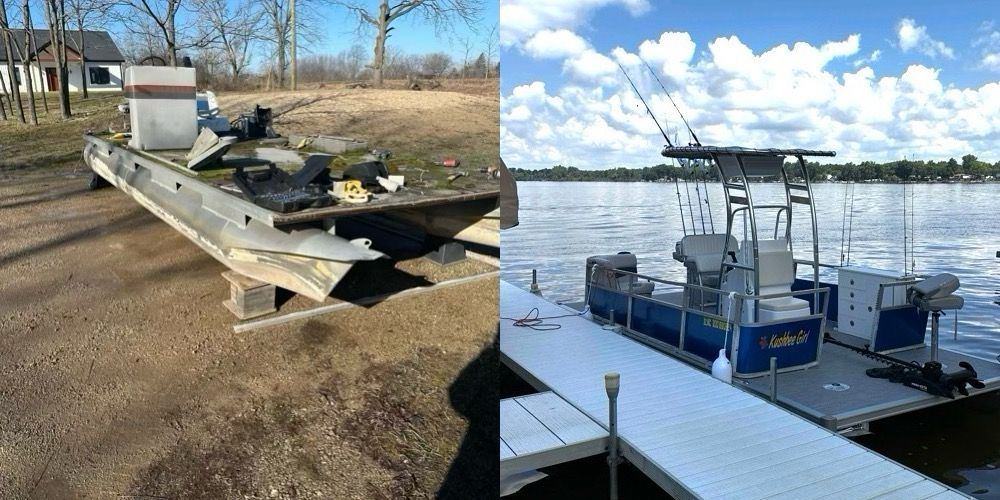
If you are considering an older boat, you might even look into a restoration project to add performance features. Check out this comparison of a project boat to see how much of a difference a professional setup makes:
Making Your Choice: A Quick Guide
Still not sure which side of the fence you're on? We've put together this quick checklist to help you decide.
Choose a traditional two-log Pontoon if:
- You primarily boat on small, calm lakes.
- Your main goal is slow cruising and relaxing.
- You are working with a stricter budget.
- You don't care about watersports like skiing or fast tubing.
- You have a smaller towing vehicle.
Choose a Tritoon if:
- You boat on large lakes or coastal areas with frequent chop.
- You want to pull skiers, wakeboarders, or large tubes.
- You frequently have 10+ people on board.
- You want the "cool factor" and the speed of a high-horsepower engine.
- You want the most stable platform possible for party hosting.
Essential Accessories to Enhance Performance
No matter which boat you choose, you can always tweak the performance with the right pontoon boat accessories.
For example, if you go with a heavy tritoon, investing in high-quality lifts is essential to keep the hull clean and free of performance-robbing algae. If you're a fisherman, adding a specialized trolling motor can give you the precision handling you need in the shallows, regardless of how many logs you have.
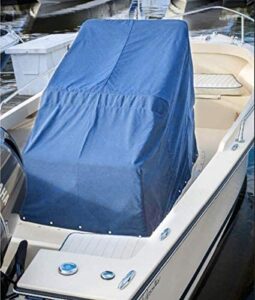
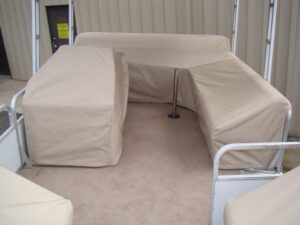
And don't forget protection! A high-performance boat is an investment. Keeping it under quality covers when not in use ensures that your seats and electronics stay in top-performing condition for years to come.

Final Thoughts
The reason everyone is talking about tritoon vs. pontoon performance is that the "pontoon" world has grown up. We are no longer limited to slow-moving rafts that stay docked the moment the wind picks up. Today, you have options that range from simple, elegant cruisers to high-performance machines that can outrun most fiberglass boats on the lake.
At the end of the day, the "best" boat is the one that gets you and your family out on the water. If a two-log pontoon gets you there, it’s a win. But if you’ve been craving that extra speed, that "banked" turn, and the ability to ignore the chop, then joining the tritoon conversation might be the best move you make this season.
We have you covered with more guides on types of boats and specific manufacturer reviews to help you narrow down your search. Happy boating!