So, you’re thinking about joining the pontoon life? We don't blame you. There’s nothing quite like cruising across a glassy lake with your favorite people, a cold drink in hand, and enough deck space to actually move around. But here’s the thing: buying a brand-new boat can put a serious dent in your wallet. That’s why we’re big fans of the used market.
Used pontoon boats are some of the best values in the boating world. They hold their value incredibly well and, because of their simple aluminum-and-wood construction, they are often easier to inspect and restore than fiberglass runabouts. Whether you’re looking for a fixer-upper or a turn-key vessel, we’ve put together this guide to make sure you know exactly what to look for so you don't end up with a "lemon" on the water.
Why Choose a Used Pontoon Boat?
Before we dive into the "how," let’s talk about the "why." Pontoon boats are essentially floating patios. They offer stability that traditional V-hull boats can’t match, making them the best pontoon boats for families, seniors, and anyone who prefers a relaxing day over a bumpy ride.
The biggest perk of buying used is depreciation. A new boat loses a chunk of its value the moment it leaves the lot. By buying a boat that’s 3 to 5 years old, you let the first owner take that financial hit. Plus, many used boats come "loaded." The previous owner likely already invested in pontoon boat accessories like depth finders, premium covers, and upgraded sound systems: items that would cost you thousands extra on a new model.
The Inspection Checklist: What We Look For
When we evaluate a used boat, we break it down into four main categories: the "logs" (the pontoons), the motor, the deck, and the furniture. We have you covered with a step-by-step breakdown of each.
1. Inspecting the Pontoons (The Logs)
The aluminum tubes are the foundation of your boat. If they aren't solid, nothing else matters.
- Check for Dents: Small dings are usually cosmetic, but large dents can affect how the boat tracks through the water.
- Look for Patches: Does it look like the aluminum has been welded or patched? If so, ask why. A professional weld is fine, but a messy "garage job" is a red flag.
- The Water Line: Look for a dark, crusty line on the logs. If the line is uneven, the boat might have been taking on water in one of the pontoons while it was sitting at the dock.
- Size Matters: Generally, you want logs that are 23 to 25 inches in diameter. Larger logs provide better buoyancy and stability, especially if you plan on carrying a lot of passengers.
2. The Heart of the Beast: The Motor
The engine is usually the most expensive part of the boat to repair or replace.
- Four-Stroke vs. Two-Stroke: Most modern pontoon boats use four-stroke engines because they are quieter, more fuel-efficient, and don’t require you to mix oil and gas. If the boat has an older two-stroke, it’s not a dealbreaker, but it should be reflected in a lower price.
- Maintenance Records: We always ask for service records. A well-maintained engine with 500 hours is often better than a neglected engine with only 50 hours.
- The Propeller: Check the prop for chips or bends. A damaged prop can cause vibrations that eventually ruin the engine’s lower unit seals.

3. The Deck and Flooring
The deck is typically made of marine-grade plywood. While it's designed to live in a wet environment, it isn't invincible.
- The "Soft Spot" Test: Walk every inch of the floor. If you feel any "give" or soft spots, the wood underneath is likely rotting. Replacing a deck is a massive job that requires stripping the entire boat.
- Underneath the Boat: If possible, get under the trailer and look up at the cross-members. You want to see solid bolts and no signs of the wood delaminating or crumbling.
4. Upholstery and Accessories
This is where you can really see how the previous owner cared for the boat.
- Sun Damage: Vinyl seats that are cracked or brittle have spent too much time in the sun without a cover. While you can replace furniture, it’s a significant expense.
- The Bimini Top: Check the frame of the bimini to ensure it isn't bent and the fabric isn't torn. A good bimini is one of the most essential pontoon boat accessories for those hot July days.
Dealer vs. Private Seller: Which is Better?
We address this question a lot. There isn't a single right answer, but there are definitely trade-offs.
Buying from a Dealer:
- Pros: They often offer limited warranties, they handle the title and registration paperwork, and the boat has usually been inspected by a certified mechanic.
- Cons: You will almost always pay a higher price due to dealer overhead.
Buying from a Private Seller:
- Pros: You can often find incredible deals, especially if the seller is looking for a quick exit. You also get to talk to the person who actually used the boat.
- Cons: It’s an "as-is" sale. Once you hand over the cash, any problems that pop up are yours to deal with.
Regardless of where you buy, we highly recommend looking for an NMMA (National Marine Manufacturers Association) certification sticker. This tells you the boat was built to high safety standards regarding fuel systems, lighting, and load capacity.
Don't Forget the Trailer
Many people forget that a boat is only as good as the trailer it sits on. If the used boat doesn't come with a trailer, you’re looking at an extra $3,000 to $5,000 to buy one.
- Rust: Check the frame for structural rust. Surface rust is okay, but flaking metal is a bad sign.
- Tires and Bearings: Check the date code on the tires. If they are more than five years old, plan on replacing them immediately.

Restoration Potential: The "Diamond in the Rough"
One of the coolest things about pontoons is their modular nature. Unlike a fiberglass boat where the layout is permanent, a pontoon is basically a flat platform. If you find a boat with "good bones": meaning the aluminum logs and the engine are in great shape: but the carpet is gross and the seats are ripped, you might have found a goldmine.
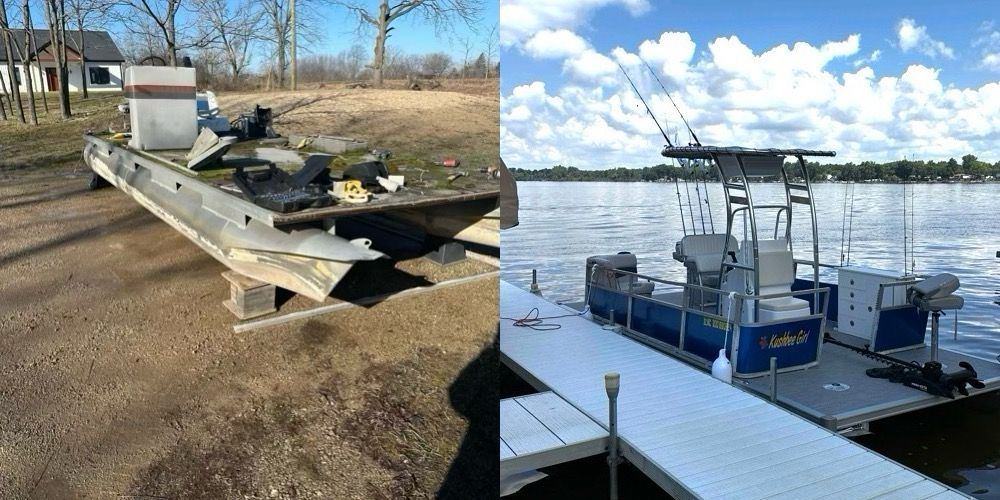
As you can see in the image above, a little elbow grease goes a long way. You can strip the old furniture, put down new vinyl flooring, and bolt on brand-new seating for a fraction of the cost of a new boat. We have plenty of resources on owning and operating your pontoon to help you through that process.
The Sea Trial: Your Final Exam
Never, ever buy a used boat without seeing it run in the water. A motor might sound fine on "muffs" (a water attachment for your driveway), but it could act completely differently under a load.
- Cold Start: Make sure the engine is cold when you arrive. You want to see how easily it starts from scratch.
- Full Throttle: Once the engine is warm, open it up. Does it reach the expected RPMs? Does it plane out correctly?
- Electronics: While you’re out there, turn on every switch. Check the navigation lights, the livewell pump, and the stereo.
- Leaks: After the ride, check the logs again. Is there any evidence of water getting into the sealed chambers?
Closing the Deal
If everything checks out and you’re ready to pull the trigger, make sure you have your paperwork in order. Check the HIN (Hull Identification Number) against the title to ensure they match. For more information about our team and why we love these boats, feel free to check out our about us page.
Buying a used pontoon boat is an exciting journey. It’s about more than just the vessel; it’s about the memories you’re going to make. By being diligent during the inspection and knowing what to look for, you can find a boat that will provide years of fun without the "new boat" price tag.

Whether you are looking for fishing pontoons or a high-speed performance tri-toon, the used market has something for everyone. Take your time, do your research, and we'll see you out on the water!