Pontoon boats have a reputation for being the “easy button” of boating, and honestly, that’s not far off. They’re stable, roomy, and flexible enough to be your fishing platform in the morning and your floating living room by sunset.
But as a new owner, it’s normal to have a pile of practical questions: Which pontoon boats are actually worth buying? What do we need for safety? What maintenance really matters? Which pontoon boat accessories are must-haves vs. money pits?
We address all these questions below, step-by-step, so you can spend less time guessing and more time enjoying the lake.
What makes pontoon boats such a great “first boat”?
Pontoon boats win for new owners because they’re:
- Stable: People move around, kids bounce, dogs exist… and a pontoon stays predictable.
- Spacious: Open deck layouts make it easier to host friends and family.
- Versatile: Cruise, swim, fish, tube, beach up, one platform can do it all.
If you’re still in shopping mode (or you’re planning your “next” boat already), our buying-focused guide is a great companion read:
Best Pontoon Boats 101: A Beginner’s Guide to Mastering Your First Purchase
How do you choose the “right” pontoon boat for your life?
Before you compare brands and floorplans, we like to start with the questions that actually matter.
1) How will you use it 80% of the time?
Most owners fall into one of these buckets:
- Cruising + relaxing: prioritize comfortable seating, shade, storage, easy boarding.
- Entertaining: prioritize open floor space, table area, upgraded sound, extra cupholders (seriously).
- Fishing: prioritize a Fish & Cruise layout, livewell, rod storage, trolling motor options.
- Watersports: prioritize horsepower, tow points, and (often) tritoon performance.
To explore more boat types and directions, start here:
The Ultimate Guide to Pontoon Boats: Everything You Need to Succeed on the Water
2) Pontoon vs. tritoon: do you need the third tube?
A standard pontoon (two tubes/logs) is great for calm water and casual cruising. A tritoon (three tubes) usually delivers:
- better handling in chop
- higher speed potential
- more weight capacity and “planted” feel
If you’re routinely on bigger water or you want to tow often, a tritoon is worth considering:
Why Everyone Is Talking About Tritoon vs Pontoon Performance (and You Should Too)
3) New vs. used: what’s the smart move?
Buying used can be a fantastic shortcut to pontoon boat life, if you know what to inspect.
Start with this checklist-style guide:
Used Pontoon Boats for Sale: 10 Things You Should Know

What safety gear and “basics” should you buy first?
Pontoon boats feel mellow, but you’re still operating a real vessel with real risk. We recommend you build your setup in two layers:
Layer 1: Non-negotiables (have these on day one)
- USCG-approved life jackets (PFDs) for everyone onboard (correct sizes)
- Throwable device (cushion or ring)
- Fire extinguisher (correct marine rating, not expired)
- Sound device (horn/whistle)
- Navigation lights (working and used properly)
- Basic first-aid kit
- Dock lines + fenders
- Anchor + rode that actually holds a pontoon in wind
This is also where we’ll say it: taking a boater safety course is one of the fastest ways to feel confident, especially for docking and right-of-way.
Layer 2: “This makes boating easier” upgrades
- Extra dock lines (you always want spares)
- Boat hook (saving you from awkward dock grabs)
- Spare prop + prop wrench (if you boat where props get eaten)
- Battery switch / battery management (if you anchor and play music a lot)
For a bigger accessories roundup, browse:
15 Best Pontoon Boat Accessories to Turn Your Deck Into a Summer Oasis

How do you confidently operate a pontoon boat (without overthinking it)?
New owners usually do fine in open water. The stress spikes around ramps, marinas, and docks, because wind + low-speed control feels weird at first.
Here’s the simple approach we recommend.
Your pre-departure checklist (every trip)
- Check weather + wind (wind is the pontoon “boss level”)
- Fuel level + battery voltage (don’t guess)
- Drain plug(s) confirmed in (trailer launch classic)
- PFD count + sizing (especially kids)
- Lines + fenders ready before you need them
- Quick walkaround: prop, transom, rails, obvious damage
Docking: the “slow is pro” method
- Come in at idle (never faster than you’re willing to bump)
- Set fenders early
- Use short bursts of throttle instead of steady power
- Expect wind to push the bow around, plan for it
- Don’t be afraid to abort and reset your approach
If you want more ownership-and-operation guidance in one place, our hub is here:
Owning & Operating Your Pontoon
What maintenance actually matters for new pontoon owners?
You don’t need to be a mechanic to keep pontoon boats happy, but you do need a routine. Here’s the “do this and you’ll avoid most headaches” list.
Weekly / every outing
- Rinse and wipe down (especially vinyl and rails)
- Check prop for dings and remove fishing line if needed
- Empty trash + food (critters are relentless)
- Ventilate before covering to reduce mildew
Monthly (or every 20–30 hours)
- Inspect the battery terminals (tight/clean, no corrosion)
- Check steering feel (stiff steering is a warning sign)
- Look underneath: pontoon tubes/logs for new dents or scuffs
- Test lights and horn
Seasonal (spring + fall)
- Engine service (oil, lower unit gear lube, impeller schedule, etc.)
- Fuel planning (stabilizer and smart storage habits)
- Deep clean pontoons/logs to reduce buildup and oxidation
- Inspect anodes (especially if you boat brackish/saltwater)
If you want a straightforward seasonal system, this is a helpful companion:
Is Your Pontoon Ready? The 10-Step Minimalist Guide to Waking Up Your Boat

Why is a good cover one of the smartest first upgrades?
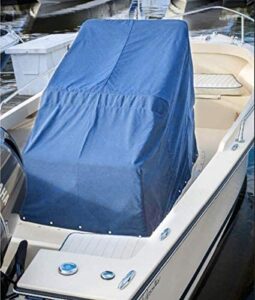
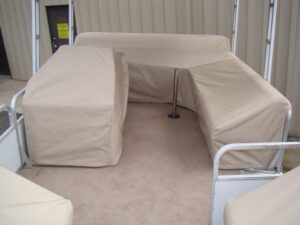
If there’s one “unsexy” purchase that pays off, it’s a quality pontoon cover. UV exposure, rain, dust, bird mess, and mildew will age your interior faster than you think, even if your boat is under a dock roof.
Here’s what to match:
- Trailerable cover if you tow often (tight fit + strong strap system)
- Heavier fabric and support poles if you deal with storms or snow load
- Breathable, mildew-resistant material if you store in humid climates
We go deep (fabric types, fit styles, support poles, and real brand comparisons) here:
How to Choose the Best Pontoon Boat Covers for All-Weather Protection (Compared)

Which pontoon boat accessories are worth it first (and which can wait)?
Pontoon boat accessories are where ownership gets fun, but it’s also where budgets get nuked. Our recommendation: buy accessories in the order that improves safety, protection, and comfort first. Then add the “wow” stuff.
Our “first season” accessories priority list
- Cover + support system (protect your interior investment)
- Anchor setup sized for pontoons (more windage = more holding need)
- Docking kit (quality fenders, lines, quick-connects if you want)
- Shade upgrades (better bimini, extensions, or a second shade zone)
- Comfort add-ons (better cooler, deck mats, extra seating)
- Entertainment + swim toys (LEDs, floating mats, diving board, etc.)
For more ideas and categories, this is a good place to browse around:
Why the Right Pontoon Boat Accessories Will Change the Way You Spend Your Weekends
What’s the easiest “new owner” game plan for your first 30 days?
If you want a simple blueprint, here’s the one we’d use with a friend who just bought their first boat.
- Do a quiet shakedown cruise (no guests) to learn controls, trim, and handling.
- Practice docking during low traffic hours with a light breeze.
- Build your onboard kit (safety gear, tools, spares, lines, fenders).
- Lock in your protection plan (cover, cleaning routine, storage routine).
- Add 1–2 comfort upgrades that make you stay out longer (shade, cooler, seating).
- Add 1 “fun” accessory (tubing gear, floating mat, upgraded audio: your call).
If you want more “what to read next,” our main blog hub is always updated with fresh guides:
https://www.pontoonboats.org/blog
Wrapping it up: you’re covered
Pontoon boat life is supposed to feel easy. When you match the boat to your real-world use, buy the right essentials, and stick to a basic maintenance routine, ownership becomes pretty stress-free: and a whole lot of fun.
If you’re still shopping, start here and explore your options:
Find Your Dream Pontoon Boat
And if you’re already an owner, keep building your setup with our latest guides and pontoon boat accessories roundups in the blog:
https://www.pontoonboats.org/blog