Buying a boat is one of the most exciting decisions you’ll ever make for your family. There’s something about the sun on your face and the gentle hum of the engine that just makes life better. But let’s be honest: buying brand new isn't always the right move for everyone’s budget. That’s why we see so many people looking for used pontoon boats for sale.
At Pontoonboats-org, we’ve seen it all: from the pristine "garage queens" to the project boats that need a little extra love. Navigating the used market can feel like a bit of a minefield if you don’t know what to look for. Are you getting a steal, or are you buying someone else's headache? We have you covered. Whether you’re a seasoned veteran or looking into best pontoon boats 101 for your very first purchase, here are 10 things you absolutely need to know before you sign on the dotted line.
1. Understand the "Log" Basics
When you’re looking at pontoon boats, you aren't just looking at a deck; you're looking at the aluminum tubes underneath, often called "logs." Most used pontoons will have two logs. These are great for calm lakes and casual cruising. However, if you plan on hitting bigger water or want more speed, you might come across a "tritoon," which has three logs.
Tritoons offer better stability and can handle much larger engines. We often get asked about the specific differences in how they handle. If you're debating between the two, you should check out our deep dive on tritoon vs pontoon performance. Understanding the hull design is the foundation of your purchase because it dictates where you can go and what you can do.
2. Price Realities: What Should You Pay?
The price of used pontoon boats can vary wildly. We’ve seen older models from the early 2000s going for around $10,000, while late-model luxury tritoons can still command over $100,000.
A few factors that drive used prices include:
- Engine Hours: Just like a car’s mileage, lower is generally better.
- Condition of the Vinyl: Re-upholstering a pontoon is expensive.
- Geography: Boats in the South might see year-round use, while Northern boats might have low hours but more "winterization" wear.
Before you head to the dealer, it’s a good idea to know everything you need to know before you buy so you can spot a fair price from a mile away.

3. The Brand Matters for Resale
Not all pontoon boats are created equal. When you buy a used boat from a top-tier manufacturer, you’re often buying better build quality and easier access to replacement parts. Brands like Bennington, Harris, Avalon, and Barletta are known for their luxury and longevity. Sun Tracker is another incredibly popular brand that offers great value and a massive support network.
Buying a "no-name" brand might save you money upfront, but it could cost you later when you can't find a specific bracket or fence panel. We always recommend sticking to brands with a proven track record. If you're curious about who is leading the pack lately, take a look at the best pontoon boats for 2026.
4. Inspecting the Engine: The Heart of the Boat
The engine is the most expensive component of your used boat. Most pontoon boats use outboard engines, which are generally easier to maintain and replace than inboard/outboard (I/O) systems.
When inspecting a used engine, we suggest:
- Checking the Oil: If it looks milky, there’s water in the engine.
- Compression Test: This tells you the health of the cylinders.
- Lower Unit Check: Look for fishing line wrapped around the prop shaft or "milky" gear lube.
A common average for pontoon engines is around 150 HP, which is a great middle-ground for cruising and light towing. If the boat is underpowered (e.g., a 24-foot boat with a 50 HP motor), you might find it frustrating to use in any wind or current.
5. Deck and Structure: Look Beneath the Surface
One of the most common issues with used pontoons is deck rot. Most older pontoons use marine-grade plywood decks covered in carpet or vinyl. If the boat wasn't covered properly, the wood can soft-rot over time.
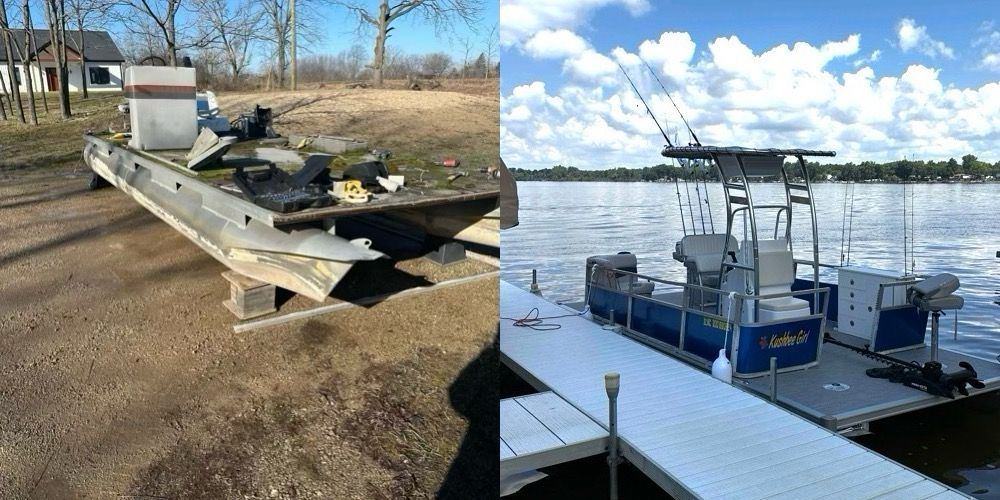
Walk across the entire deck and feel for soft spots. If the floor feels "spongy," that’s a major red flag. Also, look at the "cross-members": the metal ribs that hold the deck to the logs. You want to see straight lines and solid bolts. If you find a boat with a solid frame but a messy deck, it might be a candidate for a restoration project.
6. Verify Passenger Capacity
It’s easy to look at a 22-foot deck and think, "I can fit 15 people on here!" But the US Coast Guard capacity plate says otherwise. Every pontoon has a maximum weight and person capacity.
When buying used, ensure the capacity plate is still visible. If it's missing, you’ll need to do some research to find the official rating for that model year. Overloading a boat isn't just dangerous; it can lead to heavy fines and insurance issues. For a family-focused search, we have a guide on how to choose the best pontoon boat for family fun that breaks down these capacity needs.
7. The "Hidden" Costs: Trailers and Accessories
Sometimes a "cheap" boat isn't so cheap once you add up the extras. Does the used boat come with a trailer? If not, a new double-axle pontoon trailer can cost several thousand dollars.
Also, look at the pontoon boat accessories that come with the deal. Does it have a Bimini top in good condition? Does it come with a mooring cover? These items are expensive to replace. We address all these questions in our guide to the ultimate boat accessories for a five-star experience. If the boat is "bare bones," use that as a negotiation point to lower the price.

8. Identifying Damage to the Pontoons
While aluminum is tough, it’s not invincible. Inspect the logs for:
- Dents: Small dings are usually cosmetic, but large creases can affect performance.
- Pitting: Tiny holes caused by "electrolysis" (corrosion from electric currents in the water).
- Calcium Buildup: A white, crusty layer that indicates the boat sat in the water for long periods without cleaning.
Check the "keel": the strip of metal at the bottom of the log. If it’s ground down, the previous owner likely spent a lot of time beaching the boat on rocky shores. If you’re already an owner and noticed some of these issues, don't panic; we have a list of 7 mistakes you’re making with your used boat and how to fix them.
9. Test the Electronics and Accessories
Before you hand over the cash, turn everything on.
- Navigation Lights: Essential for safety.
- Livewells: If it's a fishing model, make sure the pumps work.
- Stereo: Does it actually play, or are the speakers blown?
- Anchor Winch: If it has an electric anchor, test it.
Speaking of anchors, the right system is crucial for a stress-free day. We recommend looking into the best pontoon anchor systems to make sure you stay put when the wind picks up.

10. The Sea Trial: Don’t Buy Without It
Never buy a boat without seeing it run on the water. A "muff start" (running the engine on a hose in a driveway) doesn't tell you how the engine performs under a load.
During the sea trial, check:
- How long it takes to "plane": Does the engine struggle?
- Steering: Is it smooth or stiff?
- Leaks: Once you’re back at the dock, check the drain plugs and the inside of the logs (if accessible) for any signs of water entry.
Making the Final Decision
Finding the right used pontoon boat is about patience and knowing what to prioritize. You might find a boat with a perfect engine but faded seats: that's a win because seats are an easy upgrade. On the other hand, a boat with shiny railings but a smoking engine is a pass.
Once you find "the one," you’ll want to start thinking about those personal touches. Whether it’s creative accessories to turn your boat into an oasis or just some catchy additions for a floating party, the customization is half the fun.

We hope this guide gives you the confidence to navigate the used market like a pro. Buying used is a fantastic way to get on the water without the "new boat" price tag, as long as you keep your eyes open and your inspection thorough. For more tips on mastering your time on the lake, check out the ultimate guide to pontoon boats. Happy hunting, and we’ll see you on the water!