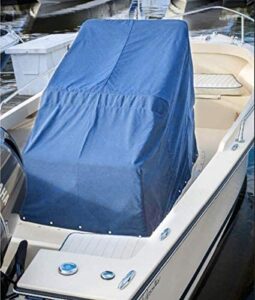
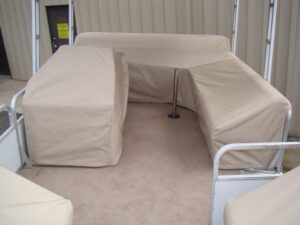
Buying a pontoon boat is an investment in your lifestyle. It’s your ticket to weekend relaxation, family fishing trips, and sunset cruises. But as any seasoned captain will tell you, the elements are not always friendly to your "living room on the water." Between the blistering UV rays, heavy rain, and the inevitable bird droppings, your boat's upholstery and flooring are under constant attack.
That’s where a high-quality boat cover comes in. Think of it as an insurance policy for your boat’s interior. However, choosing the right one isn't just about finding something that fits the length of your deck; it’s about understanding fabrics, fit styles, and construction quality.
We’ve put together this comprehensive guide to help you navigate the sea of options. Whether you’re looking for a budget-friendly shield or a heavy-duty "set it and forget it" solution, we have you covered.
Why Do You Really Need a Cover?
We often hear new owners ask if they can skip the cover if they store their boat under a dock roof. The short answer? No. Even under a roof, humidity leads to mildew, and wind carries dust and grime that can settle into your vinyl.
A good pontoon boat cover provides:
- UV Protection: Sunlight is the #1 enemy of marine vinyl. It causes cracking, fading, and brittleness.
- Waterproofing: Keeping the deck dry prevents rot in older wooden decks and stops mold from taking hold in the carpet or flooring.
- Debris Shielding: Leaves, twigs, and pine needles can stain your deck and clog your drainage.
- Critter Control: A tight-fitting cover discourages birds, raccoons, and insects from making your boat their new home.
If you’re looking for more general advice on maintaining your vessel, check out our guide on owning and operating your pontoon.
Step 1: Analyze Your Specific Use Case
Before we dive into the technical specs of different fabrics, we need to ask: how do you actually use your boat? Your storage situation dictates what kind of protection you need.
Are You Trailering or Stationary?
If you keep your boat on a trailer and pull it to the lake every weekend, you need a trailerable cover. These are designed with heavy-duty straps and reinforced stress points to handle highway speeds. A cheap, loose cover will flap in the wind, which can actually chafe your boat's paint or rails.
If your boat stays in a slip or on a lift all season, you might prioritize ease of installation. You’ll want something that clips on quickly so you don't spend 20 minutes wrestling with fabric every time you want to go for a swim. You can explore different lift options at our lifts category page.
What is Your Local Climate?
- Hot & Sunny (Florida, Arizona, Texas): Focus on UV resistance and "solution-dyed" fabrics that won't fade.
- Wet & Humid (Gulf Coast, Pacific Northwest): Prioritize breathability and mildew resistance. You want moisture to escape, not get trapped inside.
- Snowy Winters (Midwest, Northeast): You need a heavy fabric (900D or higher) and a robust support pole system to handle the weight of snow.

Step 2: Understanding Boat Cover Fabrics
When you’re shopping for pontoon boat accessories, you’ll see terms like "Denier" and "Oxford." Here is the breakdown of what those actually mean for your boat’s protection.
Polyester vs. Specialty Marine Fabrics
Most covers are made of polyester, which is naturally strong and resistant to shrinking.
- 300D to 600D Polyester: These are the "standard" weights. A 600D (Denier) polyester is the sweet spot for many owners: it’s heavy enough to be durable but light enough to handle easily.
- 900D to 1200D Polyester: These are heavy-duty "tank" covers. They are excellent for winter storage and harsh weather, though they can be quite heavy to put on alone.
- Sunbrella / Solution-Dyed Acrylic: This is the gold standard. Unlike polyester where the color is sitting on top of the fiber, solution-dyed fabrics have the color locked into the fiber itself. These last the longest and resist UV damage better than almost anything else.
Waterproofing and Coatings
Look for covers with a PU (Polyurethane) coating. This makes the fabric waterproof while allowing some level of breathability. Higher-end covers often feature "taped seams," where a waterproof tape is applied over the stitching to ensure water doesn't leak through the needle holes during a downpour.
Step 3: Comparing Popular Brands and Models
We’ve looked at the data and user feedback for some of the biggest names in the industry. Here is how they stack up.
1. National Boat Covers (WindStorm Series)
National Boat Covers offers a tiered system that makes it easy to choose based on your budget.
- WindStorm Elite: Uses Sunbrella or Sunflair fabric. This is for the owner who wants a cover to last 5–10 years. It’s highly UV-stable and trailerable.
- WindStorm CoolTech: This uses Aqualon Edge fabric, which is designed to reflect heat. We recommend this for boats in hot climates, as it can keep your boat’s interior up to 30% cooler.
- SilverCloud: A more economical, water-repellent option that is still trailerable and won't shrink or stretch.
2. Taylor Made Trailerite
Taylor Made is a legend in the boating world. Their Trailerite covers are often semi-custom, meaning they are designed to fit the specific rail configurations of various pontoon brands. They use a 300D polyester that is surprisingly durable and highly treated for UV and mildew resistance. Their 80-foot webbing system is excellent for keeping the cover tight during highway travel.
3. DeckMate / PontoonStuff
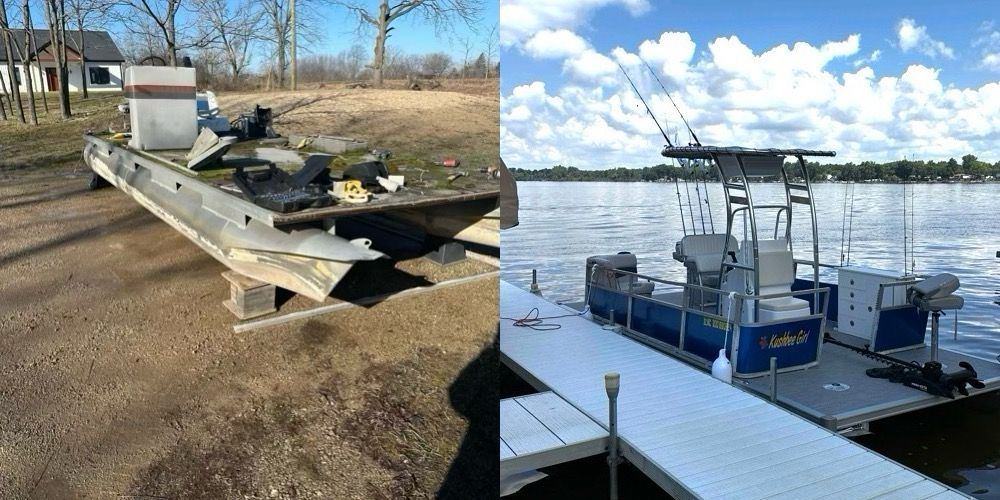
If you’ve done any pontoon boat restoration, you likely know DeckMate. They offer premium dyed polyester covers with a 4-year replacement warranty. They are a great middle-of-the-road choice: sturdier than the "Amazon basics" style covers but more affordable than a full custom Sunbrella cover.
4. Budget Options (Yescom, Vortex, Seal Skin)
- Yescom 600D: This is a popular budget pick. It uses a solid Oxford fabric with PU coating. It’s great for seasonal use, but the stitching may not last as long as premium brands.
- Seal Skin: These covers are known for their waterproofing. They use a multi-layer fabric and taped seams, making them a strong choice for regions with heavy rainfall.
- Vortex: While affordable and heavy (600D), some users have reported issues with seam durability over time. If you go this route, we suggest being very careful not to over-tension the straps.
Step 4: Fit Types – Universal vs. Semi-Custom
How the cover fits your boat is just as important as the fabric it’s made of.
- Universal Fit: These are sold by boat length and beam width (e.g., "fits 21–24 ft pontoons"). They are the most affordable but often have "extra" fabric that can sag and collect water.
- Semi-Custom Fit: These are tailored to the general shape of a pontoon (square bow vs. rounded bow). They offer a much snugger fit and are generally the best choice for trailering.
- Custom Fit: These are made specifically for your boat model, often including cut-outs for the bimini top rails. While expensive, they provide the best protection and the easiest installation.

Step 5: Don’t Forget the Support System
We cannot stress this enough: the best cover in the world will fail if you don't use support poles.
Without poles, water will pool in the large flat areas of your pontoon deck. That weight: potentially hundreds of pounds of water: will eventually stretch the fabric, tear the seams, or even break your boat's furniture.
We recommend a multi-pole system with "hangers" or "slats" that create a "tent" effect. This allows rain to roll right off the sides. Many premium covers, like those from National Boat Covers, often come with or recommend specific support kits.
Maintenance Tips to Make Your Cover Last
Once you’ve invested in one of the best pontoon boats and a high-quality cover, you want to keep them both in top shape.
- Keep it Clean: Dust and dirt can actually act as an abrasive and wear down the waterproof coating. Wash your cover with mild soap and a soft brush. Avoid harsh detergents or power washers.
- Dry Before You Fold: Never pack away a wet cover. This is a recipe for a "mold farm" next time you open it up.
- Check Your Straps: Over time, straps can fray or buckles can crack. Replace them early to prevent the cover from flying off during a storm.
- Pad Sharp Edges: If your pontoon has sharp corners on the rails or cleats, consider putting a small piece of foam or a tennis ball over them before putting the cover on. This prevents "puncture wear" over time.
Which Cover Should You Choose?
We address all these questions to make your decision easier. Here is our quick-reference guide:
- For the "Forever Boat" (High Budget): Go with the WindStorm Elite or a custom Sunbrella cover. The longevity justifies the price.
- For Frequent Highway Travel: Look at the Taylor Made Trailerite. Its strap system is specifically engineered for high-speed tension.
- For Hot, Sunny Climates: The WindStorm CoolTech is unbeatable for keeping interior temperatures down.
- For the Budget-Conscious: The Yescom 600D offers great fabric for the price, provided you use good support poles.
Protecting your pontoon boats doesn't have to be a headache. By matching the fabric to your climate and ensuring a snug fit with a proper support system, you’ll keep your boat looking brand new for years to come.
If you're looking for more specific accessory advice, feel free to browse our accessories section for the latest reviews and guides. We have you covered!