Owning a used pontoon boat is one of the most rewarding ways to get out on the water without breaking the bank. Whether you’ve picked up a classic model for fishing or a mid-2010s cruiser for family parties, these vessels are the SUVs of the sea: versatile, sturdy, and reliable. However, because pontoon boats are built differently than traditional V-hull boats, they come with a unique set of maintenance needs and "rookie mistakes" that even seasoned boaters can fall into.
At Pontoonboats-org, we’ve seen everything from neglected logs to engines that haven't seen a drop of fresh oil in three seasons. If you want your used investment to last another decade, you need to be proactive. We address all these questions and more in this guide. We’ve got you covered with the seven most common mistakes used pontoon owners make and exactly how to fix them.
1. Letting the "Scum Line" Become Permanent
One of the biggest mistakes we see is owners ignoring the aluminum pontoons (the "logs"). Unlike fiberglass, aluminum is porous and highly susceptible to "bio-fouling": the buildup of algae, calcium, and river scum. If you leave your boat in the water for weeks at a time and don't clean the logs, that grime hardens into a "scum line" that is incredibly difficult to remove and actually creates drag, slowing you down and burning more fuel.
The Fix:
You should pull your boat out of the water at least once every few months (or at the end of the season) for a deep clean. Use a dedicated aluminum cleaner or a mild acid wash to dissolve the buildup. For a "like-new" finish, follow up with a polish and a sealer. This doesn't just make the boat look better; it protects the metal from pitting and corrosion. If you're looking for the right tools for the job, check out our guide on pontoon boat accessories.
2. Neglecting the "Health" of Your Fuel
If you bought a used pontoon boat, there is a high chance it sat in a driveway or a slip for a few months before you took possession. Modern fuel contains ethanol, which attracts moisture. Over time, this causes "phase separation," where the water and gas separate, leading to a gunked-up carburetor or fuel injectors. Many owners make the mistake of just "topping off" old gas with new gas, but that doesn't solve the underlying chemistry issue.
The Fix:
Always use a marine-grade fuel stabilizer, especially if the boat is going to sit for more than two weeks. If the fuel in your used boat is more than six months old, the best move is to drain the tank and start fresh. Replacing your fuel-water separator filter annually is also a non-negotiable step in owning and operating your pontoon.

3. Using the Wrong (or No) Cover
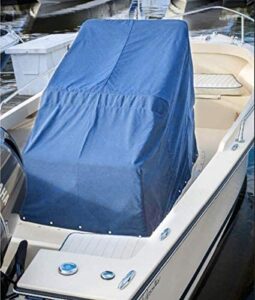
We see this all the time: a beautiful used pontoon with sun-cracked vinyl and faded carpets. The culprit? Leaving the boat uncovered or using a cheap, non-breathable plastic tarp. Standard tarps trap moisture underneath, creating a greenhouse effect that breeds mold and mildew. On the flip side, leaving it uncovered allows UV rays to eat away at your upholstery, which is one of the most expensive things to replace on a boat.
The Fix:
Invest in a high-quality, custom-fit mooring cover. These are designed to breathe while keeping water out. Make sure you use "poles" or a support system to prevent water from pooling in the middle of the cover, which can stretch the fabric or even snap the support snaps. If your current cover is shredded, you can find replacements in our covers category. A good cover is the single best investment you can make to maintain the resale value of your boat.
4. Overlooking the "Soft Spots" in the Deck
Most used pontoon boats feature a marine-grade plywood deck covered by carpet or vinyl. A common mistake is assuming that because the carpet looks okay, the wood underneath is solid. Water can seep through screw holes for seats or railings, leading to rot. If you ignore a soft spot, it will eventually spread, making the boat unsafe for passengers.
The Fix:
Perform a "stomp test" across the entire deck before and after every season. If you feel any give or hear a "crunchy" sound, you need to investigate. Fixing a small section of rot by sealing it or replacing a single panel is much cheaper than a full deck restoration.
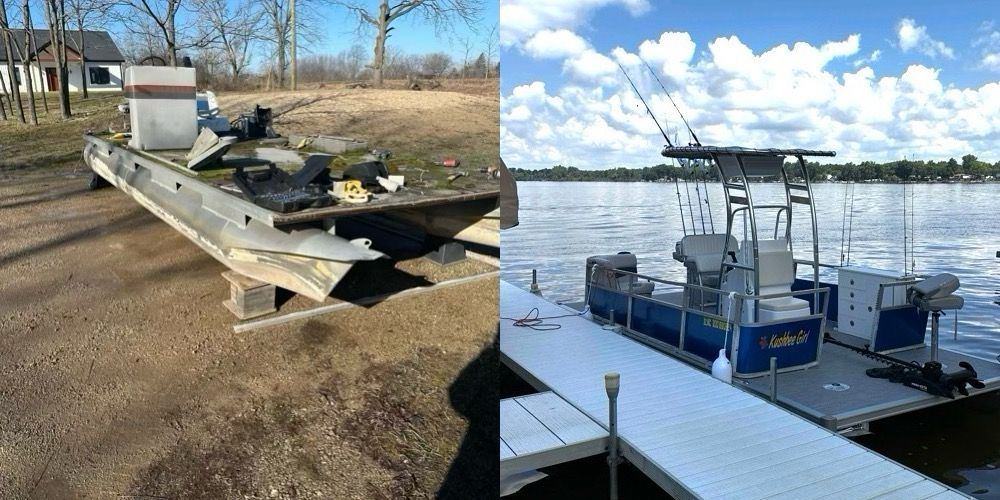
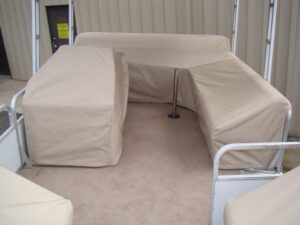
As shown in the image above, a full restoration can bring a boat back to life, but preventing the rot in the first place is much easier on the wallet. If you are dealing with an older boat, keeping the deck dry and ensuring your furniture is properly sealed to the floor will save you thousands.
5. Ignoring Battery and Electrical Maintenance
Used boats often come with "mystery wiring": add-ons from previous owners like LED strips, new stereos, or fish finders that might not have been installed perfectly. A common mistake is leaving the battery connected during the off-season or failing to check the terminals for corrosion. Pontoons have a lot of surface area and exposed metal, making electrical "grounds" particularly important.
The Fix:
Start by cleaning your battery terminals with a wire brush and applying a bit of dielectric grease. If you’re adding new pontoon boat accessories, make sure they are fused properly. We always recommend installing a battery disconnect switch. This allows you to completely cut power when you leave the boat, ensuring that a small "vampire" draw from a stereo or clock doesn't leave you stranded with a dead battery next weekend.
6. Overloading and Poor Weight Distribution
Because pontoons feel so stable and spacious, it’s easy to forget they have strict weight limits. A major mistake new owners make is inviting ten friends onto a boat rated for eight, or piling all the heavy coolers and gear at the very front. This causes the nose of the pontoons to "plow" into the water, which drastically reduces steering control and can even lead to "stuffing the bow" (diving under a wave).
The Fix:
Check the capacity plate located near the helm. This isn't just a suggestion; it's a legal limit. When loading your boat, keep the heaviest items (coolers, anchors, and larger guests) toward the center or slightly toward the rear. This keeps the tips of the logs up, allowing the boat to plane properly and handle waves safely. If you’re looking for the best pontoon boats for large groups, always look for triple-tube (tritoon) models which offer significantly higher weight capacities.

7. Improper Engine Trimming
Many used pontoon owners drive their boats with the engine trimmed all the way down all the time. While this is fine for taking off, keeping it there while cruising is a mistake. It forces the bow down, increases spray, and makes the engine work much harder than it needs to. You'll burn more gas and get a much rougher ride.
The Fix:
Once you are up to cruising speed, slowly "trim up" the engine. You’ll feel the bow of the boat lift, the steering will become lighter, and the engine RPMs will naturally increase. You’re looking for that "sweet spot" where the boat feels like it’s gliding on top of the water rather than pushing through it. For more tips on handling, visit our section on owning and operating your pontoon.
We’ve Got You Covered
Owning a used pontoon doesn’t have to be a headache. Most of the "big" problems we see are simply the result of small things being ignored for too long. By keeping your logs clean, your fuel fresh, and your deck dry, you’re ensuring that your boat stays a source of joy rather than a source of stress.
Whether you are a beginner or a seasoned veteran, there is always something new to learn about these incredible vessels. If you have questions about specific repairs or are looking to upgrade your current setup, feel free to reach out to us through our contact page. We’re here to help you get the most out of your time on the water.
Happy boating, and we'll see you out there!