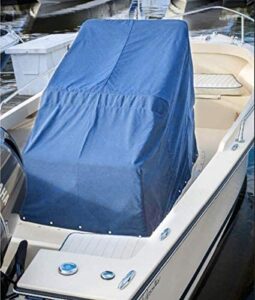
Let’s be real for a second: buying a boat is a massive investment, and the motor is often the single most expensive “part” of that purchase. When you’re browsing the best pontoon boats on the market today, you’re almost always going to hit a fork in the road. That fork is usually labeled 115hp vs. 150hp.
On paper, it’s just 35 horsepower. In your wallet, it’s a jump of $2,500 to $4,000 depending on the brand and the rigger. If you’re trying to keep things “value-first,” you might be tempted to pocket that cash and stick with the 115hp. But will you regret it the first time you try to pull a tube with six adults on board?
We’ve seen this debate play out a thousand times at the docks. In 2026, with engine tech getting more efficient but prices staying stubbornly high, making the right call is more important than ever. We’ve crunched the numbers and sat through the “real talk” sessions to help you decide which motor is actually worth your hard-earned money.
The Price vs. Power Equation
When we talk about value, we aren’t just talking about the lowest sticker price. We’re talking about the best return on your investment over the next five to ten years.
Typically, a 115hp outboard is the “sweet spot” for manufacturers. It’s light, it’s relatively simple to maintain, and it fits perfectly on most small pontoon boats (20 feet or under). Stepping up to a 150hp usually involves moving to a larger engine block. That means more weight on the transom and a bigger hole in your bank account.
Is that extra 35hp worth the $3,000 premium? If you are looking at a 20-foot boat and you mostly cruise with your partner and maybe a dog, the answer is probably no. However, if you are looking at a 22-to-24-foot boat, that extra power stops being a luxury and starts being a necessity.
Speed: The 6 MPH Trap
One of the most common questions we get is: “How much faster will I go?”
According to real-world performance tests (like those from Yamaha and Mercury), putting a 150hp on a standard 20-foot pontoon boat only nets you about 5 to 7 mph more at the top end compared to a 115hp. If the 115hp gets you to 25 mph, the 150hp might hit 31 or 32 mph.
Whether you’re restoring an old gem or buying new, the motor choice defines your experience on the water.
For most pontoon boats, a 6 mph difference doesn’t sound like a game-changer. You aren’t out there to win races; you’re out there to relax. But here’s the “Real Talk” catch: that speed difference is measured with a light load.
The Load Factor: Where the 115hp Struggles
This is where the 115hp vs. 150hp debate gets interesting. Pontoons are essentially floating living rooms. We love them because we can bring everyone: Grandma, the kids, the neighbors, and three coolers.
- With 2 People: The 115hp feels punchy and fun.
- With 8 People: The 115hp starts to feel like it’s dragging an anchor. You’ll notice the bow takes longer to lift, and getting the boat on a plane becomes a chore. You might drop 8-10 mph off your top speed just by adding passengers.
- The 150hp Advantage: Because of the larger displacement and higher torque, the 150hp handles “the crowd” much better. It maintains its speed and maneuverability even when you’ve reached the weight limit of the boat.
If your “value-first” plan includes hosting party pontoon sessions every weekend, skipping the 150hp might actually be a mistake you feel every time you leave the dock.
Towing Tubes and Watersports
Can you pull a tube with a 115hp? Absolutely. We do it all the time. But let’s manage expectations.
If you have a 115hp on a 22-foot boat, you can pull a kid on a tube or a light teenager on skis without much trouble. But if you want to whip a two-person tube across the wake with a full boat of spectators, the 115hp is going to struggle to give them that “thrill” they’re looking for.
The 150hp provides that extra “grunt” needed to pop a skier out of the water quickly. In the world of pontoon boat accessories, a ski tow bar is useless if the engine can’t provide the tension. If watersports are a priority for your family, the 150hp is the minimum we’d recommend for a 22-24ft boat.

A family enjoying watersports behind a pontoon boat, highlighting the need for sufficient horsepower.
The Fuel Economy Paradox: Is Bigger Better?
You’d think a smaller engine uses less gas, right? Not always.
This is one of those “insider” secrets that seasoned boaters know. A 115hp engine on a 23-foot boat has to work incredibly hard to maintain a cruising speed of 20 mph. It might be running at 5,500 RPMs just to keep you moving.
Meanwhile, a 150hp engine on that same boat can hit 20 mph at maybe 4,000 RPMs. Because the 150hp isn’t “screaming” or straining, it can actually be more fuel-efficient at mid-range cruising speeds than the smaller motor.
We address these questions often: don’t just look at the displacement; look at the effort. Over a long summer, the 150hp might save you enough in fuel to offset a small portion of its higher upfront cost, though you’d have to spend a lot of time on the water for it to pay for itself completely.
Maintenance and Long-Term Value
In 2026, maintenance is a major part of the “value” conversation. Both the 115hp and 150hp modern four-strokes are incredibly reliable. However, the 150hp is the “gold standard” for resale.
When you eventually decide to sell your boat, a 22-foot pontoon with a 150hp will sell much faster than one with a 115hp. Buyers are often wary of “underpowered” boats. They don’t want to buy your “value” boat and then realize they can’t take their friends out comfortably.
We have you covered if you’re worried about the technical side: modern outboards are designed for ease of use. But keep in mind that the 150hp usually requires a more robust trailer and potentially a more heavy-duty lift because of the extra weight.
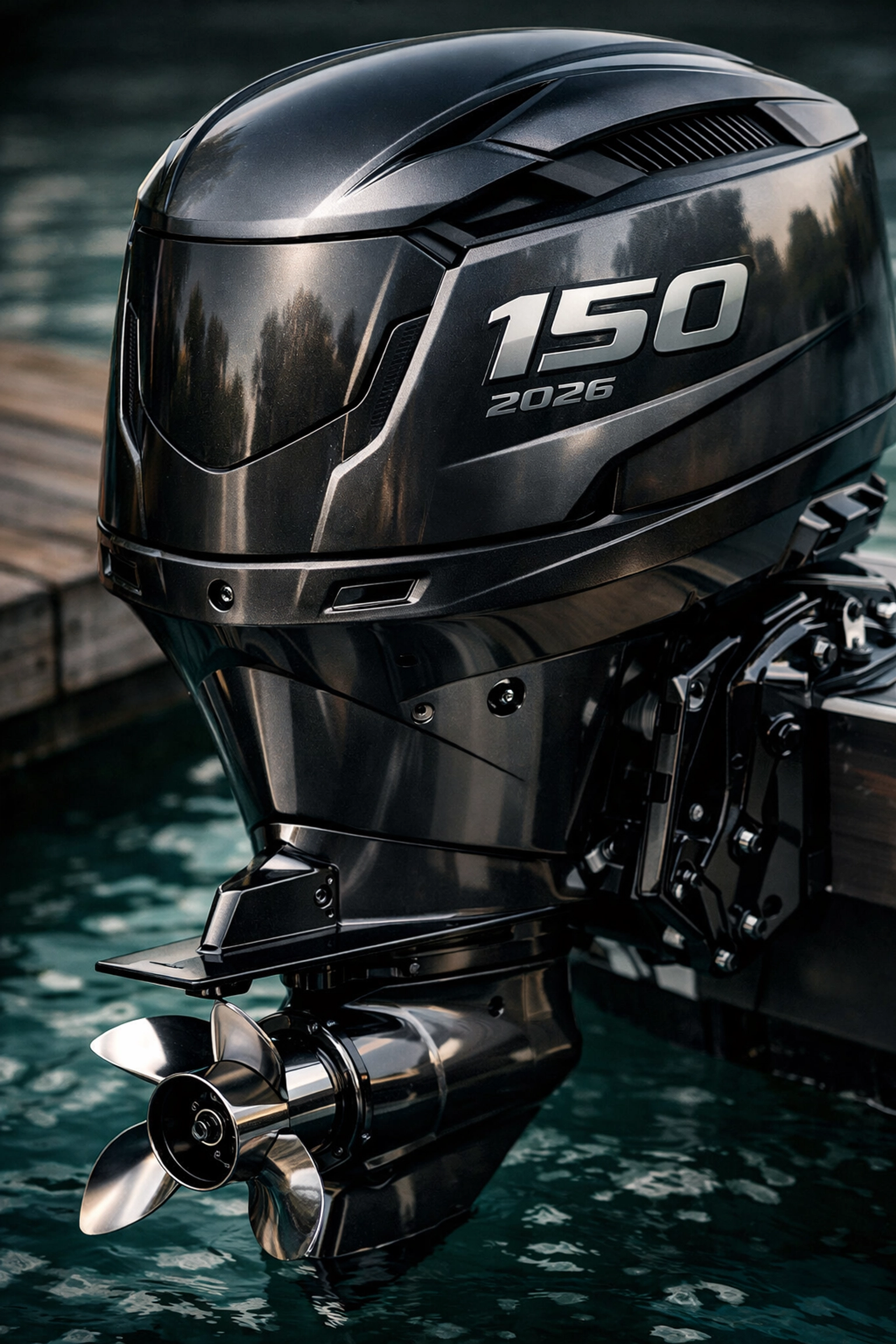
Close-up of a modern outboard motor on a pontoon boat, showing the sleek design of 2026 models.
Making the Final Call: Which Is for You?
We’ve laid out the facts, but let’s boil it down to some quick “Real Talk” scenarios to help you pull the trigger.
Go with the 115hp if:
- Your boat is 20 feet or shorter. A 150hp on a 18-foot boat is often overkill and adds unnecessary weight.
- You are a “Cruiser.” If your idea of a perfect day is 10 mph sunset cruises with 2-4 people, the 115hp is the king of value.
- You’re on a strict budget. If the extra $3,000 for the engine means you can’t afford a high-quality cover or nice furniture, stick with the 115hp. A comfortable boat is better than a fast, uncomfortable one.
Go with the 150hp if:
- Your boat is 22 feet or longer. This is the tipping point where the 115hp starts to feel sluggish.
- You have a big family. If “the more the merrier” is your motto, you need the torque.
- You want to tube or ski. Don’t frustrate your kids with a slow start; get the 150hp.
- You care about resale. It’s simply the more desirable engine size for the secondary market.
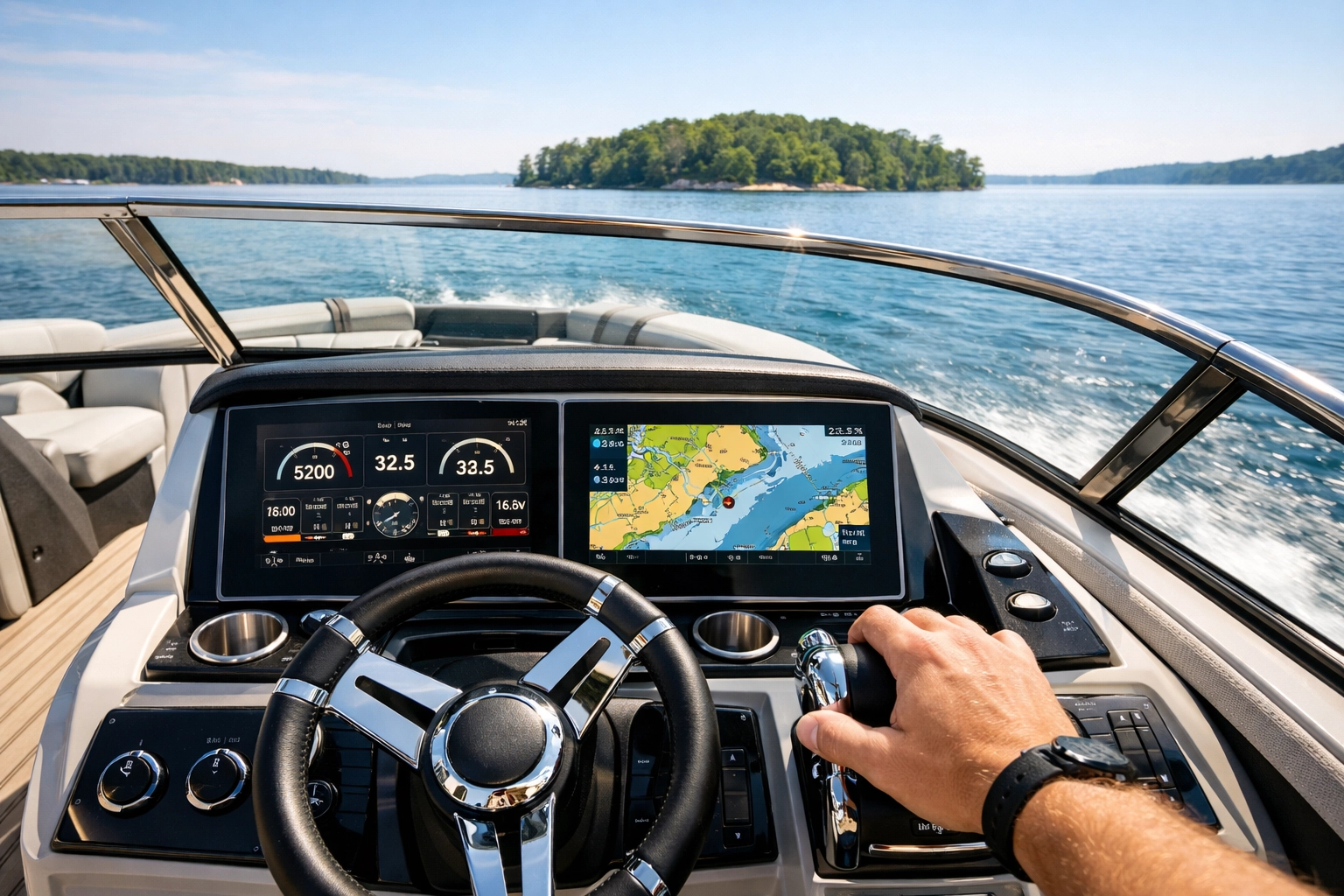
A clear dashboard view of a pontoon boat at cruising speed, showing the RPM and GPS gauges.
Final Thoughts
At the end of the day, “value” isn’t just about the lowest number on the invoice. It’s about ensuring that every time you turn the key, the boat does exactly what you want it to do. There is nothing less “valuable” than owning a boat that feels underpowered or stressed when your friends come over.
If you can swing the extra cost, the 150hp is almost always the better long-term choice for the typical American lake life. But if you’re keeping it simple and small, the 115hp is a legendary workhorse that won’t let you down.
Still not sure? You can check out more about different types of pontoon boats to see how engine requirements change based on the hull design. Whether you’re looking for fishing pontoons or a high-speed tritoon, we’ve got the info you need to stay afloat.
Happy boating, and we’ll see you out on the water!