Let’s be honest: nobody wakes up on a beautiful Saturday morning, looks at the glass-calm lake, and thinks, “Man, I really want to spend some time reviewing my insurance policy today.” We get it. You want to be out there with a cold drink, your favorite playlist, and your friends and family.
But as we head deeper into 2026, the world of boating is changing. Pontoons are no longer just “slow-moving rafts.” They are high-performance machines, floating entertainment centers, and, let’s face it, significant financial investments. Whether you just picked up a brand-new Tritoon or you’re keeping a classic alive, the question of pontoon boat insurance is one we need to talk about.
At Pontoonboats-org, we’ve seen every scenario play out on the water. We’ve seen the joy of a perfect season and the heartbreak of a “standard” policy that didn’t cover what the owner thought it did. We’re here to break down the truth about specialized insurance so you can get back to the fun stuff with total peace of mind.
Is It Legally Required? The Short Answer Might Surprise You
If you’re looking for a simple “yes” or “no” from the government, the answer is mostly no. In the vast majority of U.S. states, you are not legally required to carry insurance to operate a boat. As of 2026, only Arkansas and Utah have laws on the books specifically requiring liability insurance for motorboats.
However, just because it isn’t a state law doesn’t mean you can skip it. We address these “stealth” requirements all the time. If you think you’re in the clear because you don’t live in Arkansas, hold on a second. There are three big reasons why insurance becomes effectively mandatory for most of us:
- The Bank Says So: If you financed your boat, your lender will absolutely require full coverage. They want to protect their investment until that final payment is made.
- The Marina Rules: Most marinas require a minimum of $100,000 in liability coverage before they’ll even let you look at a slip. They need to know that if you accidentally ding a million-dollar yacht while docking, you’re covered.
- The “Better Safe Than Sorry” Factor: Even if no one forces you to have it, the cost of a single accident or a mechanical failure can easily eclipse the cost of a decade of premiums.
Why Specialized Pontoon Insurance Is Different
You might be thinking, “I have a great relationship with my car insurance guy, can’t I just add the boat to my homeowners or auto policy?”
We see people try this a lot, and while it might save you a few bucks a month, it often leads to a “Swiss cheese” policy, lots of holes. Specialized pontoon boat insurance is built differently because pontoons are used differently than a bass boat or a jet ski.
The “Floating Living Room” Factor
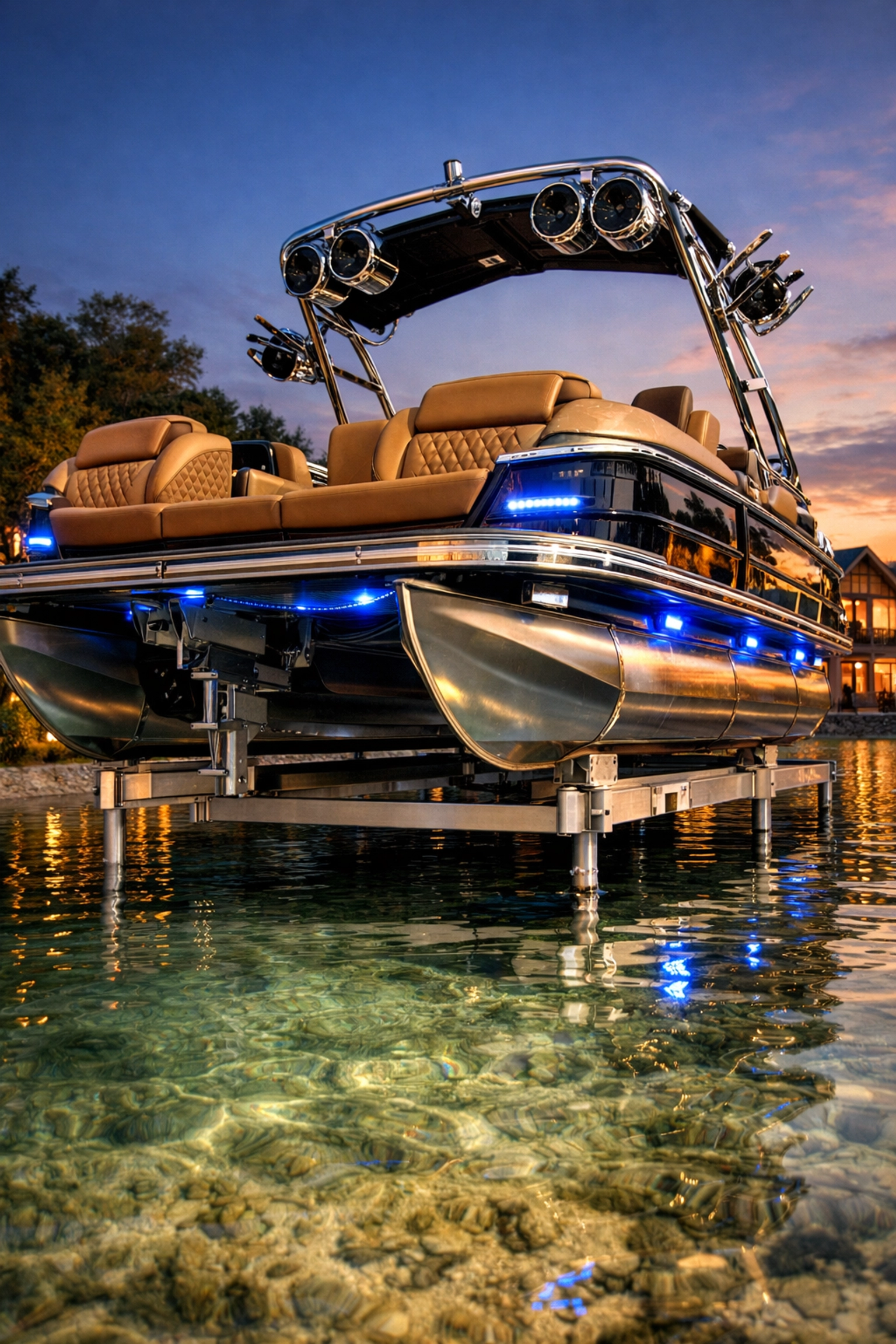
Modern pontoons are packed with luxury features. We’re talking about high-end upholstery, sophisticated sound systems, and integrated lighting. A standard boat policy might view your boat as just a “hull and motor.” If a storm rips your custom bimini top or a guest spills something that ruins $3,000 worth of marine-grade vinyl, a generic policy might not pay out. Specialized policies are designed to cover the specific “furniture” aspects that make a pontoon unique.
Agreed Value vs. Actual Cash Value
This is the biggest trap in the industry. In 2026, boat values are staying higher for longer, but depreciation is still a thing.
- Actual Cash Value (ACV): If your boat is totaled, the insurance company pays you what the boat was worth at the time of the accident. If the market dipped or you have a lot of hours on the engine, you might find yourself $10,000 to $15,000 short of what it costs to buy a replacement.
- Agreed Value: This is what we always recommend. You and the insurer agree on a value when you start the policy. If the worst happens, that’s the check they write. No surprises.
Coverage Options You Didn’t Know You Needed
When you dive into specialized owning and operating your pontoon insurance, you’ll see options that sound like “extras” but are actually essentials for the modern boater.
Propulsion Plus Coverage
Think about the engine on your pontoon. It’s likely a high-tech outboard that costs more than a mid-sized sedan. Propulsion Plus is a specific type of coverage that handles mechanical breakdowns of the lower unit. If you’re out on the lake and your gears decide they’ve had enough, this coverage can save you from a multi-thousand-dollar repair bill that standard insurance wouldn’t touch.
On-Water Towing
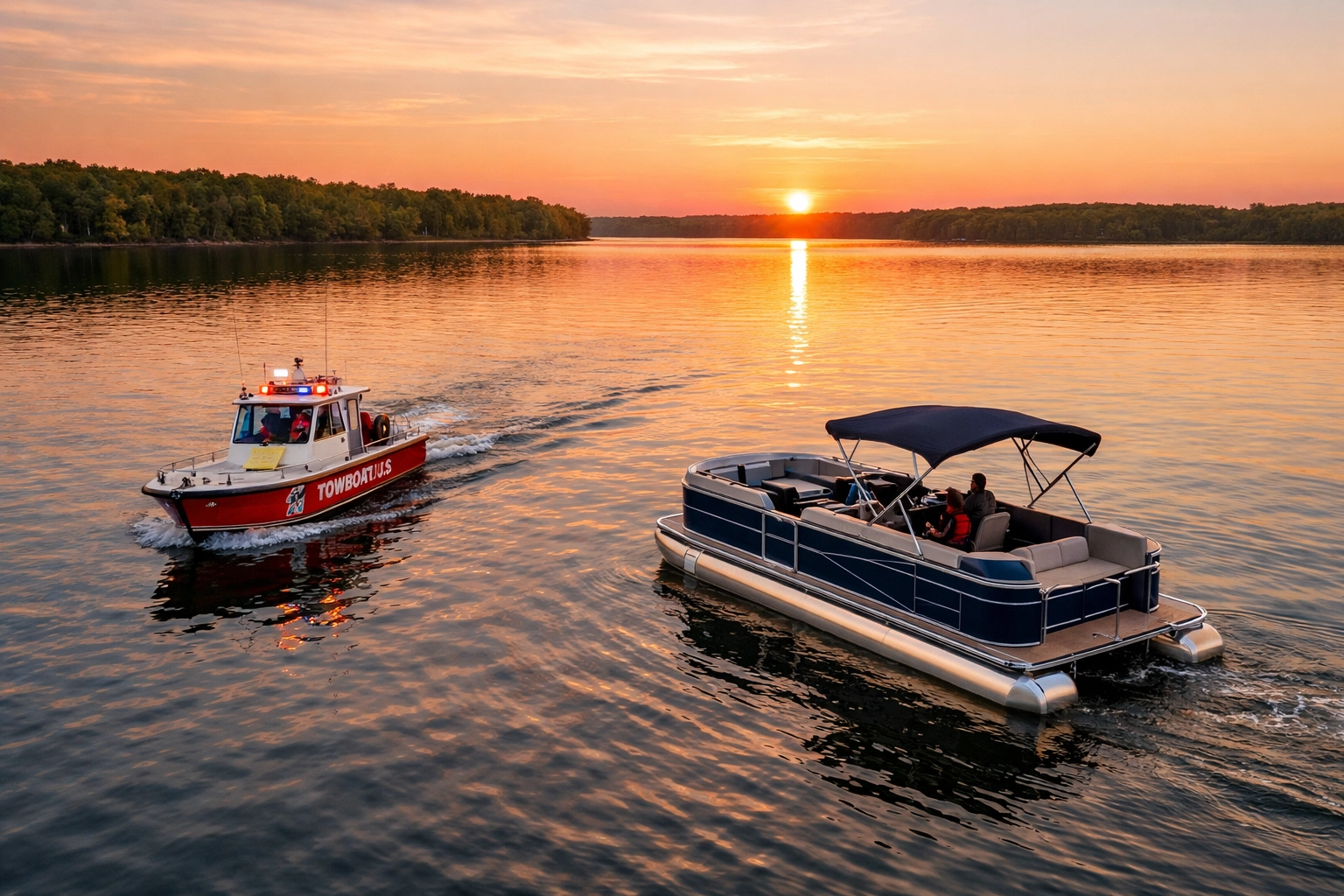
We’ve all been there, or at least, we’ve all seen someone there. A dead battery, a fouled prop, or running out of gas happens to the best of us. Without specialized insurance, an on-water tow can cost anywhere from $500 to $2,000 depending on how far out you are. Most specialized pontoon policies include towing as a standard or very cheap add-on.
Fishing and Ski Equipment
Are you using your boat for fishing? Or maybe you have a garage full of tubes, skis, and wakeboards? Standard policies usually have very low limits for “personal property.” Specialized pontoon insurance often includes coverage for up to $2,500 (or more) for the gear you actually use on the boat. We have you covered whether it’s a high-end rod or a $500 inflatable tube.
The Rising Risk: Uninsured Boaters in 2026
One trend we are watching closely in 2026 is the rise of the uninsured boater. Because insurance isn’t legally required in most places, there are a lot of people on the water who are “self-insured” (which usually means they have $0 set aside for an accident).
If one of these boaters hits you, your specialized policy’s “Uninsured/Underinsured Boater” coverage kicks in. This covers your medical bills and boat repairs even if the person who hit you doesn’t have a dime. In our opinion, this coverage alone is worth the price of the premium.
How to Decide if You Need It
We want to help you make an informed choice. Ask yourself these four questions:
- What is the boat worth? If it’s a $5,000 “project boat” you keep on a private pond, you might be okay with liability-only. If it’s a $60,000 modern cruiser, you need specialized protection.
- Where do you boat? High-traffic lakes increase your risk of collisions. Remote rivers increase the cost of towing.
- What’s your “Oh No” fund look like? If your engine blew up tomorrow, could you stroke a check for $15,000? If the answer is no, insurance is your safety net.
- Do you have high-end accessories? If you’ve invested in accessories and lifts, make sure they are listed on your policy.
Making the Next Move
Ready to get protected? We always suggest starting with a specialist who understands the boating world. Don’t just settle for the “add-on” to your car insurance. Look for companies that offer “disappearing deductibles”: a great perk where your deductible drops by 25% for every year you don’t have a claim.
If you’re still in the phase of figuring out what kind of boat you want to protect, check out our guide on finding your dream pontoon boat. We’ve spent years gathering the best info so you don’t have to do the guesswork.

Final Thoughts from the Team
At the end of the day, specialized pontoon insurance isn’t about the “what if” of an accident; it’s about the “peace of mind” for every hour you’re on the water. We want you to be able to pull away from the dock knowing that your investment, your gear, and: most importantly: your passengers are protected.
The 2026 boating season is going to be incredible. Let’s make sure a little bad luck doesn’t cut your summer short. If you have more questions about keeping your boat in tip-top shape, feel free to explore our community or reach out to us at contact-us. We’re always here to help a fellow boater navigate the waters.
Safe boating, and we’ll see you out there!