![[FEATURED_IMAGE]](https://cdn.marblism.com/9ngZHEtEc4c.jpg)
We’ve all seen it: that sad, faded pontoon boat sitting in a neighbor’s side yard, looking more like a luxury apartment for local squirrels than a vessel for summer fun. You know the one. The carpet is more “moss” than “marine-grade,” the aluminum is oxidized to a dull chalkboard grey, and the seats look like they’ve survived a light skirmish.
But where most people see a junk pile, we see a blank canvas. There is a specific kind of magic in taking a “project boat” and turning it into a custom masterpiece that turns heads at the sandbar. It’s the journey from rust to relaxation, and today, we’re walking you through exactly how that transformation happens.
Is That Old Toon Worth Saving?
Before you break out the power tools, you have to ask the big question: Is this boat a diamond in the rough or just rough? We always tell our community that “good bones” are everything. When we look at a restoration project, we aren’t worried about the rotten wood or the shredded vinyl; we’re looking at the aluminum logs.
Are the pontoons themselves structurally sound? Are there massive cracks, or is it just some pitting and oxidation? If the metal is solid, you have the foundation for a luxury oasis. If you’re still weighing the pros and cons of starting from scratch versus buying new, check out our guide on finding your dream pontoon boat to see which path fits your lifestyle.
The Stripping Phase: Saying Goodbye to the 80s
The first step in any real-world restoration story is the teardown. It’s messy, it’s sweaty, and it’s strangely satisfying. We’re talking about ripping out that soggy, 20-year-old carpet and unscrewing furniture that has seen better days.
During this phase, we address all the “hidden” problems. You’ll likely find that the wiring looks like a plate of spaghetti and the wood deck has the structural integrity of a wet cracker. This is the moment where most people want to quit, but hang in there. You’re just clearing the way for the good stuff.
Step 1: Restoring the Foundation
Once the boat is stripped down to the cross-members, it’s time to focus on the metal. This is where the “rust” (or oxidation, for the sticklers out there) gets handled.
- Aluminum Cleaning: We use specialized aluminum brighteners to bring that factory shine back to the logs. It’s a chemical process that eats away the grime and leaves the metal looking brand new.
- Pressure Testing: We always recommend a quick pressure test to ensure there are no pinhole leaks. There’s nothing worse than finishing a luxury build only to realize your boat is a slow-motion submarine.
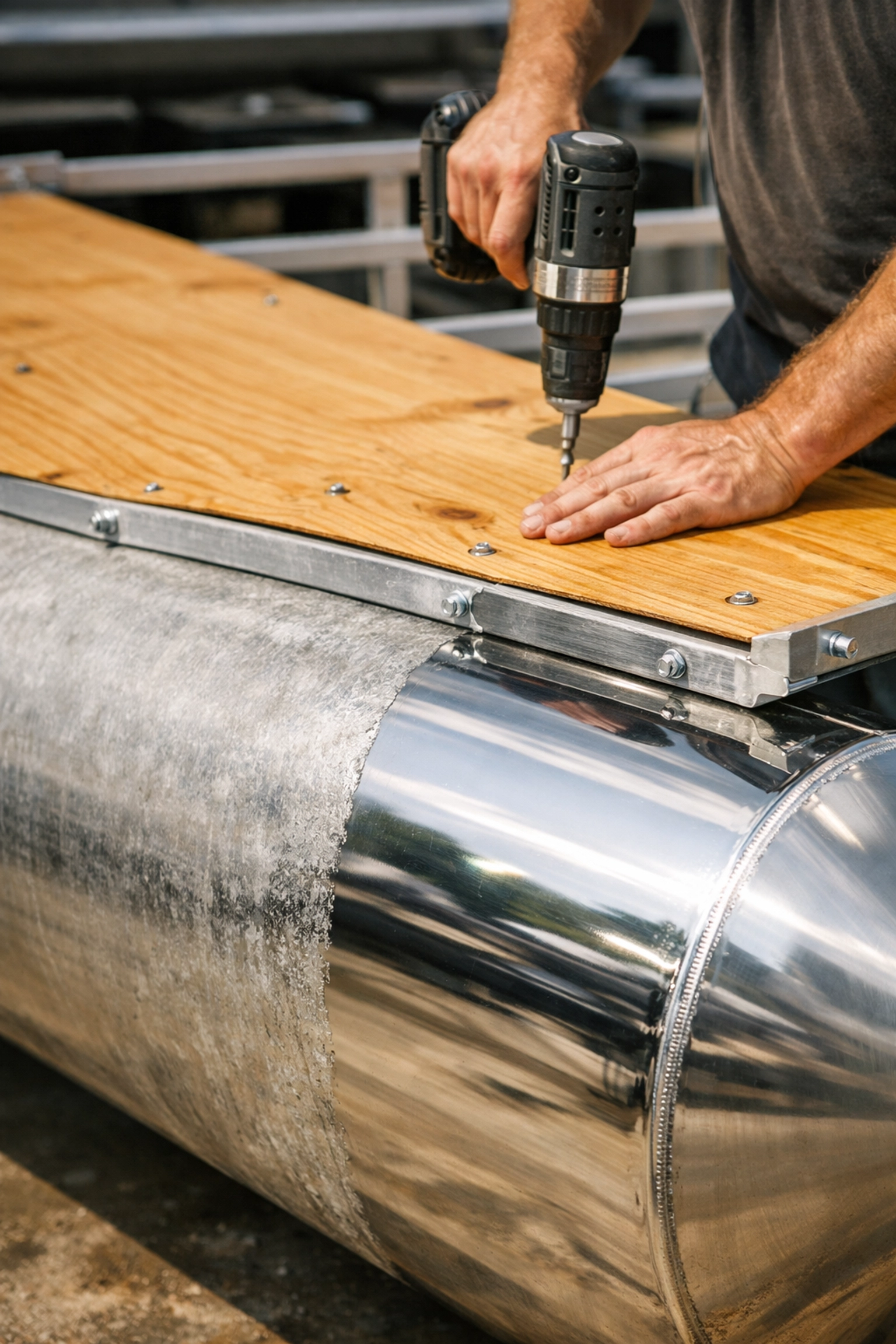
- The Deck: We replace old plywood with ¾-inch marine-grade pressure-treated wood. This is the stage where the boat starts to feel like a boat again.
Step 2: From Splinters to Silk (The Flooring Upgrade)
If you want your restoration to scream “luxury,” you have to ditch the carpet. Modern pontoon enthusiasts have moved toward woven vinyl flooring. It’s easier to clean, it doesn’t hold water (or smells), and it looks incredible.
Choosing the right flooring is a game-changer. Whether you go with a classic teak look or a modern grey pattern, this is the first “visible” upgrade that makes you realize the project was worth it. If you’re wondering how to maintain these high-end materials once they’re installed, we have you covered in our section on owning and operating your pontoon.
Step 3: Designing Your Custom Layout
One of the best parts of a restoration is that you aren’t stuck with the factory layout. Want a massive L-shaped lounge for sunbathing? Do it. Need a dedicated fishing station with a livewell in the back? You’ve got it.
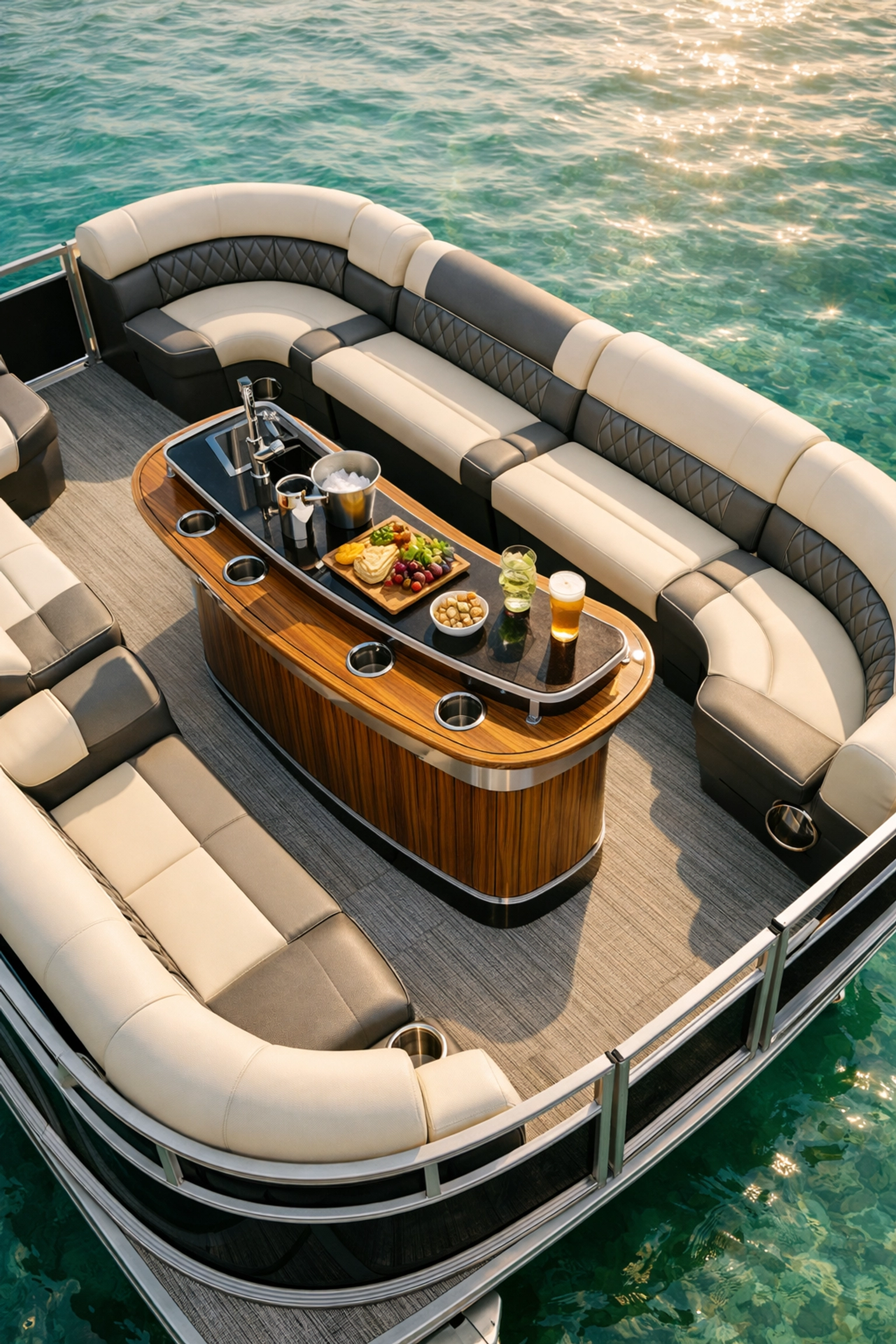
We love seeing custom builds that include “the extras.” Think built-in bars, high-end captain’s chairs, and even integrated kitchenettes. When you’re rebuilding from the deck up, you’re the architect. If you’re curious about how different styles: like a tritoon versus a traditional pontoon: affect your layout options, you can read more about tritoon vs pontoon performance here.
Step 4: The Tech and The Toys
Now for the fun part: the “Bling.” A real restoration isn’t complete without modern electronics and accessories. Here is what we usually prioritize to get that high-end feel:
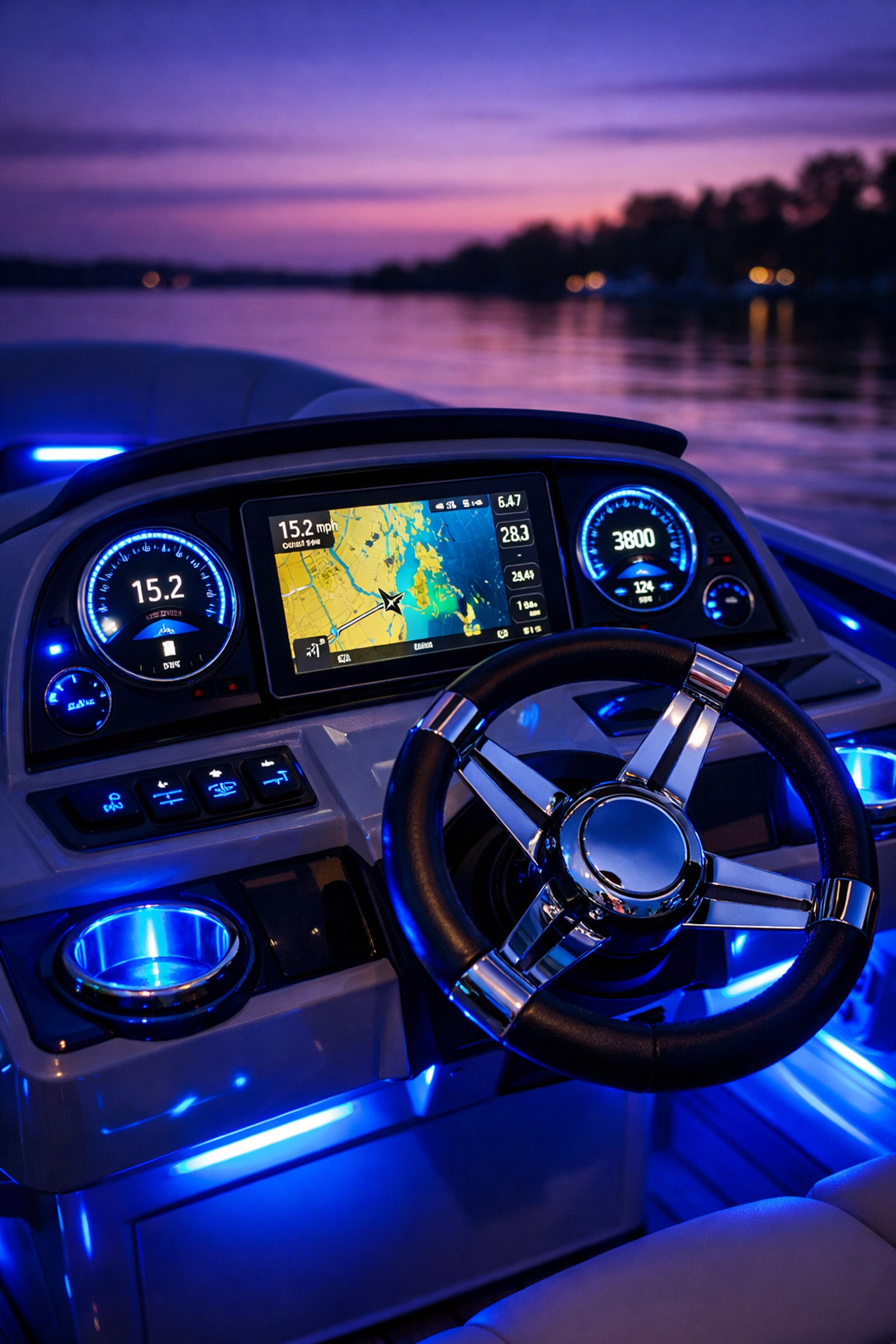
- RGB Lighting: Interior mood lighting and under-deck lights that make the boat glow on the water at night.
- Premium Sound: A Bluetooth-enabled marine audio system with a sub-woofer. If the neighbors can’t hear your 80s rock playlist, are you even boating?
- Modern Gauges: Replacing old analog dials with a digital GPS-integrated dashboard.
- The Powerplant: Sometimes the old 50HP motor just doesn’t cut it. Upgrading to a modern, quiet, fuel-efficient outboard makes the “relaxation” part of the story much easier to achieve.
For a full list of the gear that can take your build to the next level, head over to our pontoon boat accessories page.
Why the “Real-World” Journey Matters
You might be asking, “Why go through all this trouble when I could just go to a dealership?”
It’s about the pride of the build. When you take a boat that was destined for the scrap yard and turn it into the star of the lake, you’ve created something unique. You know every bolt, every wire, and every inch of that vinyl. Plus, a custom restoration often results in a boat that is more durable and better looking than a mid-range new model, all while keeping a few extra bucks in your pocket for gas and coolers.
Practical Questions We Often Hear
How much does a full restoration cost?
We address this by looking at the scale. A basic “refresh” (paint and seats) might cost a few thousand, while a total “luxury” overhaul with a new motor and premium decking can range from $10,000 to $25,000. Still, that’s often half the price of a brand-new luxury pontoon.
Can I do this myself?
Absolutely. If you’re handy with a drill and have a bit of patience, most of these tasks are DIY-friendly. However, we always recommend having a professional check your engine and fuel systems for safety.
How long does it take?
A dedicated weekend warrior can usually knock out a full restoration in 4 to 8 weeks, depending on how much custom work is involved.
Ready to Start Your Own Story?
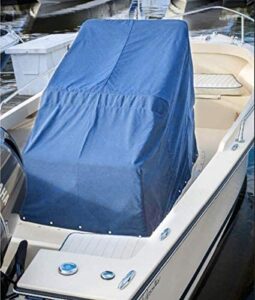
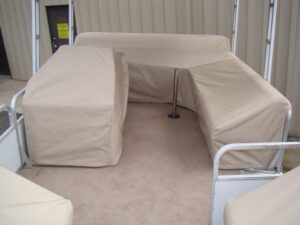
At Pontoonboats-org, we live for these transformations. Whether you are looking for advice on covers to protect your new investment or you want to join a community of fellow restorers to trade tips and tricks, we are here to help.
The journey from rust to relaxation isn’t just about a boat; it’s about the memories you’ll make once the work is done. So, go find that “squirrel hotel” in your neighborhood and get to work. We’ll see you out on the water!
If you have questions about your specific build or need help finding the right parts, don’t hesitate to contact us. We’ve seen it all, and we’re always happy to help a fellow boater turn a dream into a reality.