Walking into a boat show is a bit like walking into a candy store for adults. The lights are bright, the chrome is polished to a mirror finish, and every boat looks like the ticket to your best summer ever. We’ve all been there: the excitement is contagious, but it’s also the easiest place to make a snap decision you might regret once the “show special” high wears off.
At Pontoonboats-org, we want you to walk onto that convention center floor with the confidence of a seasoned captain. Whether you’re looking for a quiet electric cruiser or a high-performance tritoon, preparation is your best friend. We’ve put together this guide to help you navigate the aisles and ask the right questions so you find the perfect match for your lake life.
1. Establish Your “Real-World” Budget
Before you even step through the turnstiles, you need a number in your head. But here’s the thing: the price on the windshield isn’t the price of the boat. We see many first-time buyers focus solely on the monthly payment or the MSRP, forgetting that owning a boat involves a few extra layers.
When we talk about budget, we’re looking at:
- The Purchase Price: Including freight and dealer prep fees.
- Tax and Registration: These vary wildly by state.
- Insurance: Don’t leave the lot without it.
- Annual Maintenance: Oil changes, winterization, and storage.
- The Trailer: Surprisingly, many “show prices” don’t include the trailer. If you plan on hauling your boat, check out our guide on pontoon trailers to understand what you’ll need.
Knowing your “all-in” number keeps you grounded when a salesperson starts showing you the ultra-premium trim levels that might be $50,000 over your comfort zone.
2. Define Your Primary Mission
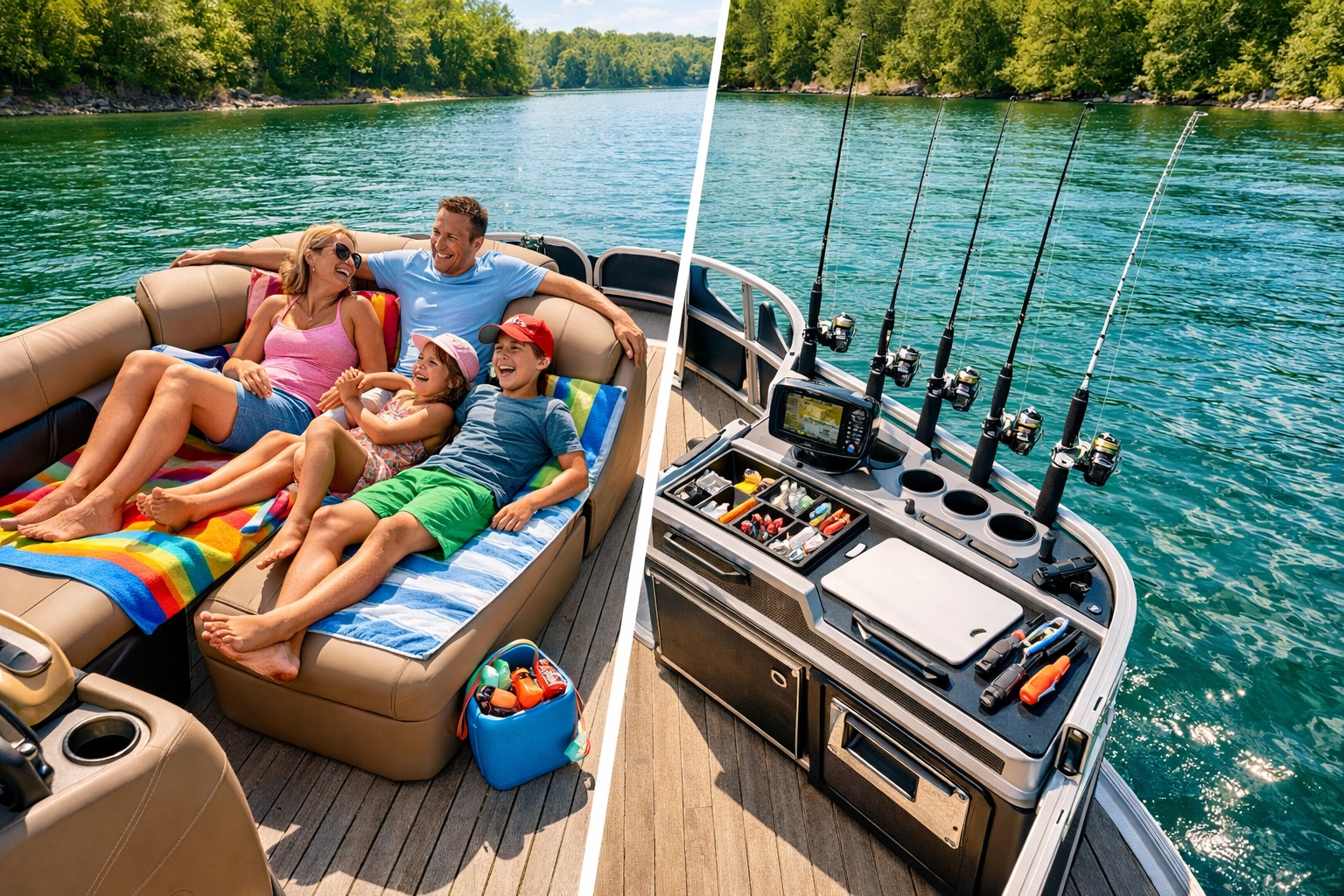
What are you actually going to do with this boat? It sounds like a simple question, but the answer changes everything from the floorplan to the engine size. We categorize most pontoon uses into four buckets:
- Cruising and Entertaining: You need comfortable seating and a good sound system.
- Fishing: You’ll want livewells, rod holders, and vinyl flooring that’s easy to spray down. You can see some dedicated setups in our fishing category.
- Watersports: You’ll need a larger engine and a tow bar or arch.
- The “Everything” Boat: A hybrid layout that balances loungers with a few fishing chairs.
If you don’t define your mission first, you might end up with a high-speed fast pontoon when all you really wanted was a stable platform for the grandkids to swim off of.
3. Be Realistic About Your Crew Size
It’s tempting to buy a boat that can hold 15 people “just in case” you host a huge party. However, if 90% of the time it’s just you, your spouse, and the dog, a massive 27-foot boat might be more of a headache to dock and maintain than it’s worth.
Check the capacity plate on every boat you board. Remember that “capacity” refers to the maximum weight, not necessarily how many people can sit comfortably without knocking knees. We recommend sitting in every seat of the boat you’re considering. Is there enough legroom? Can people move past each other to get to the cooler?
4. Know Your Water Environment
Where you plan to boat is just as important as how you plan to boat. If you’re on a small, private lake with a 10-HP limit, a twin-engine beast is useless. Conversely, if you’re on a massive body of water like Lake Michigan or a busy river with heavy wake, a standard two-tube pontoon might leave you feeling a bit “salty” (literally and figuratively).
Larger bodies of water usually demand a tritoon (three tubes) for better stability and handling. We have a full breakdown of the tritoon vs. pontoon debate to help you decide if that third log is worth the investment for your specific lake.
5. The Two-Tube vs. Three-Tube Decision
This is the most common fork in the road for new buyers.
- Pontoons (Two Tubes): Great for calm water, smaller crowds, and lower budgets. They are easier to trailer and require less horsepower to get moving. If you’re looking at small or mini pontoons, two tubes are usually the standard.
- Tritoons (Three Tubes): These offer a smoother ride in rough water, higher weight capacities, and the ability to handle much larger engines. If you plan on going over 25-30 MPH or frequently encounter choppy water, we almost always recommend a tritoon.
6. Match the Horsepower to the Hustle
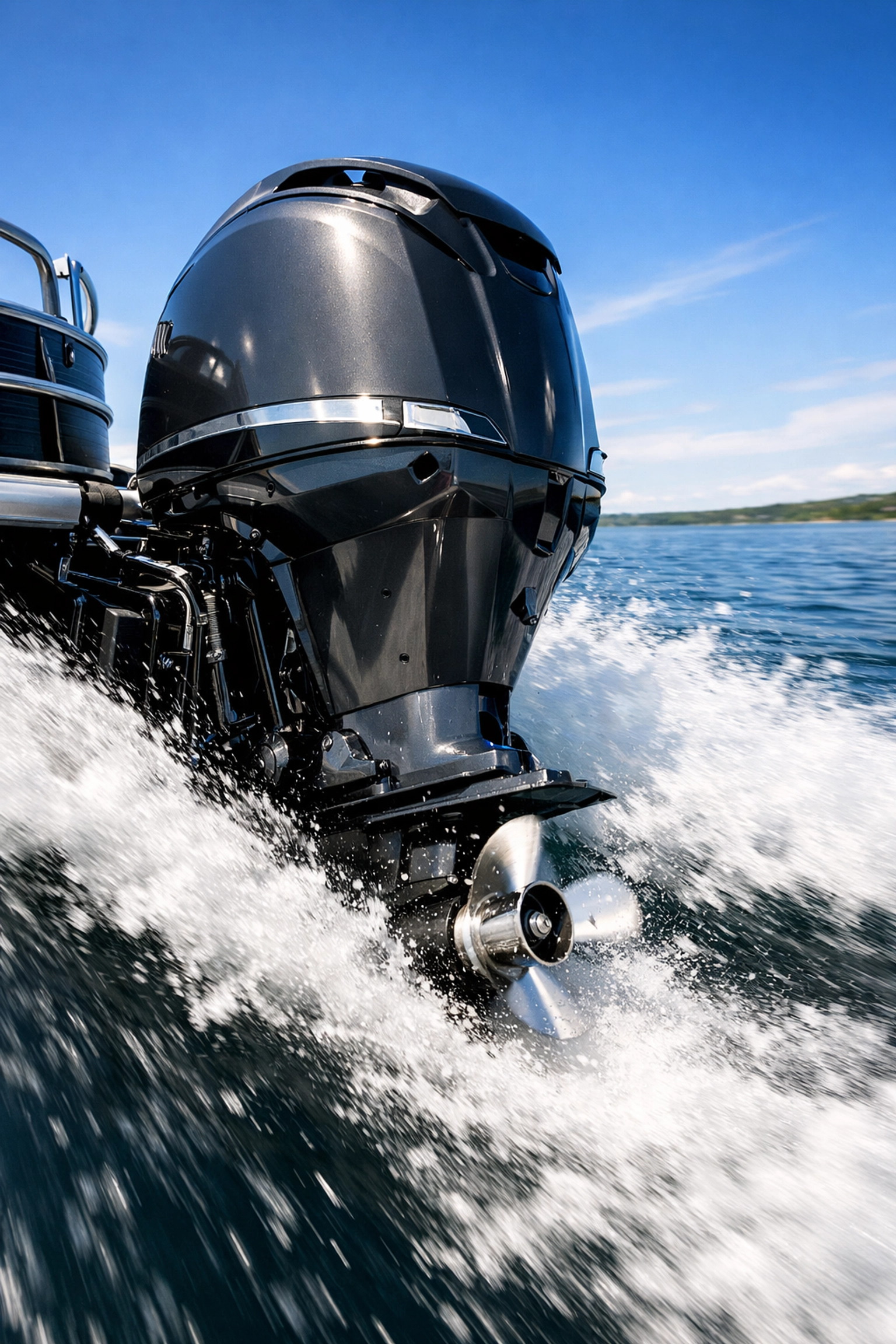
Under-powering a boat is one of the most common mistakes we see. A boat might look like a steal because it’s paired with a small engine, but once you load it with ten people and a full cooler, it might struggle to get on plane.
Think about your goals:
- Leisurely Cruising: 40-90 HP is usually plenty for two-tube boats.
- Tubing and Light Skiing: 115-150 HP is the “sweet spot” for most families.
- High Performance: 200+ HP is where things get fun for wakeboarding or high-speed runs.
Interestingly, 2026 is seeing a massive shift in power options. Some lakes are even moving toward electric pontoon motors, which offer a silent, eco-friendly way to enjoy the water.
7. Assess Your Storage and Docking Situation
Before you fall in love with a 25-foot boat, go home and measure your dock. Will it fit? Does your lake have length restrictions?
Also, consider where the boat will go in the winter. If you’re storing it in your driveway, does it clear the HOA rules? If you’re using a boat lift, check its weight capacity. We cover a lot of these logistical hurdles in our accessories and lifts section, as the boat is only one part of the total setup.
8. Look Closely at Construction Quality
At the boat show, every boat looks shiny. You need to look “under the hood”: or in this case, under the deck.
- Cross-members: These are the ribs that hold the deck to the tubes. Look for “C-channels” or “I-beams.” Generally, the closer together they are, the sturdier the floor will feel in rough water.
- Tube Diameter: Standard tubes are usually 23 to 25 inches. Larger 27-inch tubes provide more buoyancy and a higher ride.
- Ponton Material: Look at the thickness of the aluminum. Thicker is better for durability.
Don’t be afraid to crawl around and look at the welds. A quality manufacturer like Sun Tracker or Apex Marine will have clean, consistent welding throughout.
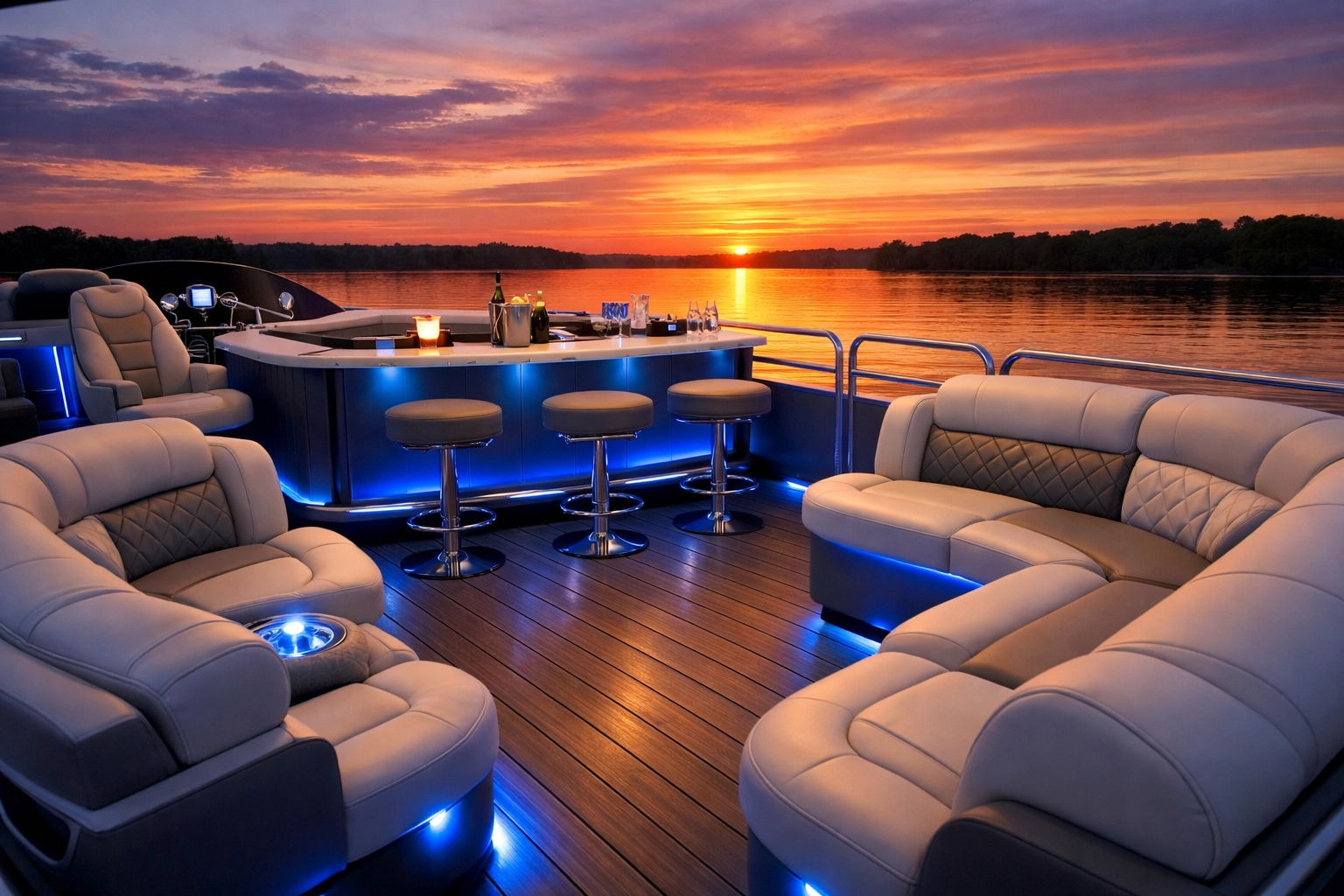
9. Evaluate Floorplans and Comfort
This is where you spend your time, so don’t settle. Boat shows allow you to try out dozens of layouts in a single afternoon.
- L-Lounges: Great for conversation.
- Quad-Couches: Perfect for large groups.
- Rear-Facing Loungers: The most popular choice for watching swimmers or the sunset.
- Bar Packages: Some boats come with built-in tables and stools for the ultimate party boat experience.
Check the quality of the vinyl and the density of the foam in the furniture. If it feels thin now, it won’t hold up well after three seasons of sun and wet swimsuits.
10. Understand Standard vs. Optional Equipment
The boat you see on the show floor is almost always “loaded.” The price tag might look attractive, but you need to ask: “What is actually included in this price?”
Common items that might be extra:
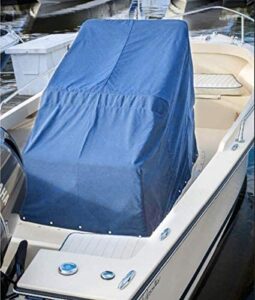
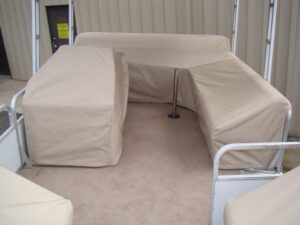
- Bimini Tops and Covers: Essential for protecting your investment. Check out our covers category to see why they matter.
- GPS/Fishfinders: Often an upgrade.
- Upgraded Flooring: Changing from carpet to “seagrass” or woven vinyl is usually an add-on.
- Lighting Packages: Those cool underwater LEDs look great but usually cost extra.
We address all these questions because we want you to have a “no-surprises” buying experience. Ask for a “Build Sheet” that lists every single option and its cost.
Moving Forward
Heading to a boat show should be fun, not stressful. By doing your homework on budget, use case, and construction, you’ll be able to spot the true gems among the shiny distractions. We have you covered with deep dives into every category of boating, from DIY kits to high-end luxury liners.
Take your time, bring a notebook, and don’t feel pressured to sign a contract on the first day. The right boat for your family is out there: we’re just here to help you find it. If you have more questions about specific gear or setups, feel free to explore our accessories section for more expert advice!